FESTIVALS
Raksha Bandhan for Kids: The Festival of the Bond of Care
Raksha Bandhan is the festival of the rakhi, a bright thread that sisters tie on their brothers' wrists to show love and good wishes. Brothers promise to look after them. Here you can learn what the festival means, the stories behind it, and how people celebrate it today.
Raksha Bandhan in 10 lines
What is Raksha Bandhan?
Raksha Bandhan, often called Rakhi, is a Hindu festival that celebrates the bond between brothers and sisters. The name means "the bond of protection". It falls on the full moon day of the month of Shravana, usually in August.
The festival follows the lunar calendar, so its date changes every year. In 2027 it is on Tuesday 17 August, although calendars can differ by a day in some regions.
Raksha Bandhan in 10 lines
- Raksha Bandhan is a festival of brothers and sisters.
- It is also called Rakhi.
- It comes on a full-moon day, usually in August.
- The name means "the bond of protection".
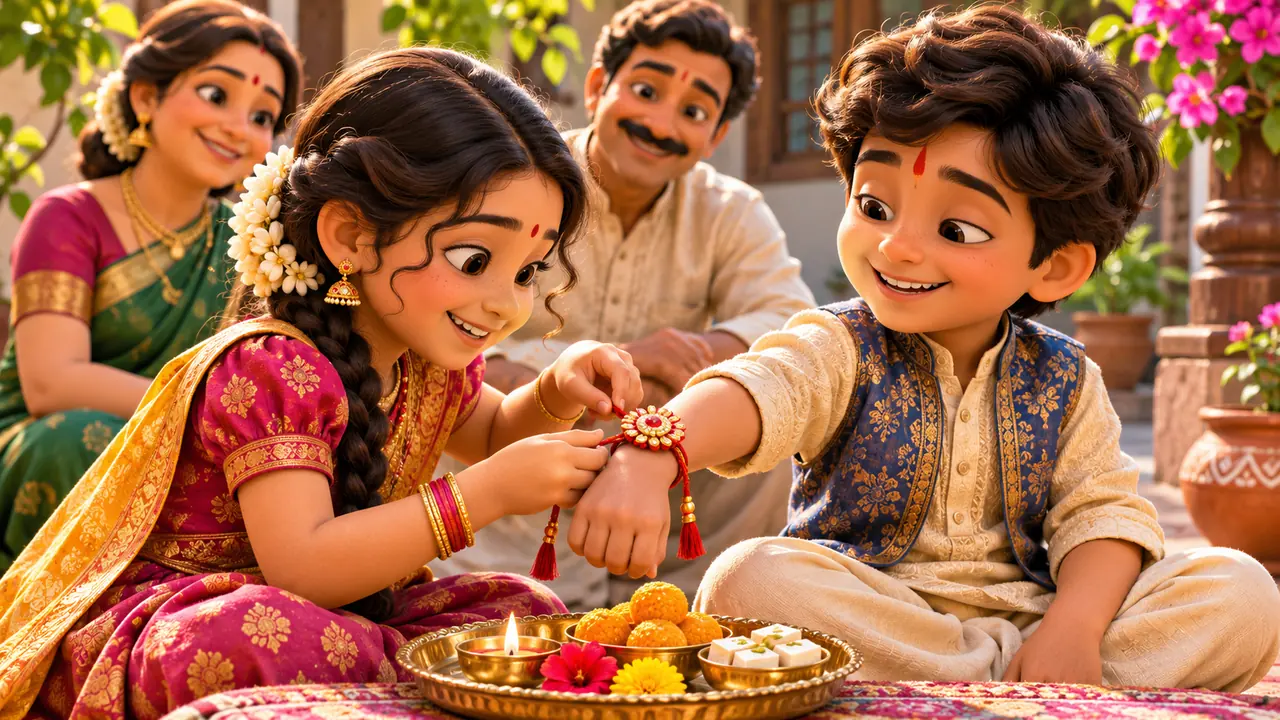
- A sister ties a colorful thread called a rakhi on her brother's wrist.
- She puts a tilak on his forehead and gives him a sweet.
- The brother promises to look after her and gives her a gift.
- Many people also tie rakhis on cousins, friends and soldiers.
- Families share a special meal and sweets together.
- The festival reminds us to care for the people who care for us.
How families celebrate
On Raksha Bandhan the whole family gets together, and the day usually follows this pattern.
- The rakhi. A sister ties a rakhi, a decorated thread or bracelet, on her brother's wrist.
- Tilak and aarti. She often applies a small mark called a tilak on his forehead, offers a prayer for his well-being and gives him a sweet.
- A promise and a gift. The brother promises to look after his sister and gives her a gift in return.
- Sweets and a meal. Families share a special meal and sweets, and relatives who live far away often send rakhis by post.
Stories behind the festival
People tell several stories about the festival's origins. These are traditions, and each family may remember a different one.
- Krishna and Draupadi. One popular story tells that Draupadi tore a strip from her sari to bind Krishna's finger when he was hurt. Krishna promised to protect her whenever she needed help.
- Yama and Yamuna. Another tradition says the river goddess Yamuna tied a thread on the wrist of her brother Yama, the god of death, and he blessed her with a promise of long life and protection.
- A thread of unity. In 1905, when the British partitioned Bengal, the poet Rabindranath Tagore encouraged people of different faiths to tie rakhis on each other's wrists as a sign of friendship and unity.
A bond that is bigger than brothers and sisters
Today many people tie rakhis on cousins, friends, neighbors and teachers, and sisters tie rakhis on sisters. Many people also tie rakhis on soldiers and on people who protect the community. The festival is about care, and care can be shared with anyone who looks after you.
Some communities also tie rakhis on trees as a promise to protect nature.
What Raksha Bandhan teaches
The festival reminds us that people who care for us deserve our care in return. Protection does not only mean strength. It also means listening, being kind and standing by someone when they need help.
Why these stories?
Our library does not include the stories of Krishna and Draupadi or of Yama and Yamuna. These stories share the festival's themes of loyalty, protection and care.
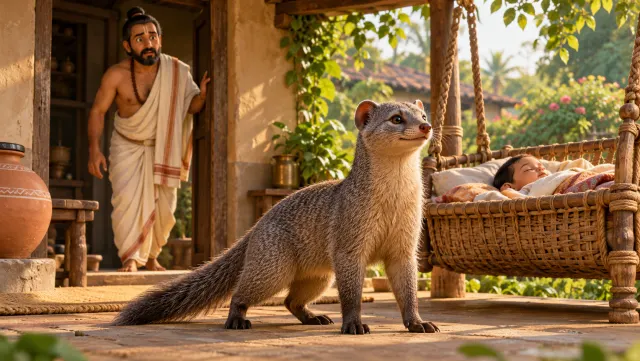
- The Brahmin and the Mongoose. A loyal mongoose protects a family's baby, and a hasty decision leads to sorrow. It is a story about loyalty, protection and thinking before acting.
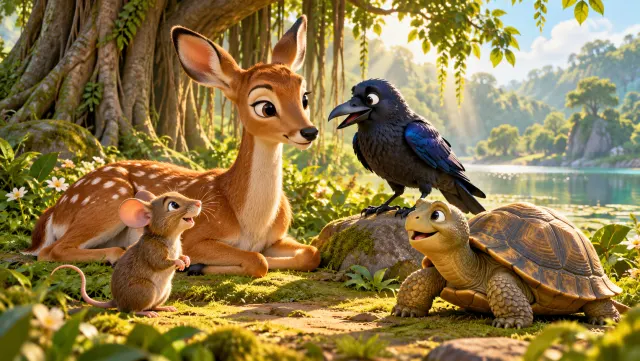
- The Four Friends and the Hunter. Four friends protect and rescue one another. It is a story about how care and teamwork keep people safe.
Talk about Raksha Bandhan together
Read a story, then try one or two of these questions with your child or class.
- What does it mean to protect someone? Is it only about being strong?
- Who looks after you? How can you show them you care?
- Why is a simple thread such a strong symbol of promise?
- Is there a friend or relative who is like a brother or sister to you? How could you thank them?
- In the story of the mongoose, what could the Brahmin have done differently before reacting?
More ways to share stories: print a free coloring page, try a story puzzle, or find questions and one-page packs for every story on the Parents & Teachers page.
Raksha Bandhan FAQ
When is Raksha Bandhan in 2027?
In 2027, Raksha Bandhan is on Tuesday 17 August. The festival follows the lunar calendar, so the date changes every year and can differ by a day in some regions.
What does Raksha Bandhan mean?
Raksha means protection and bandhan means bond or tie, so Raksha Bandhan means the bond of protection. The thread that sisters tie, called a rakhi, is a sign of that bond.
Why do sisters tie a rakhi on their brothers?
The rakhi is a sign of a sister's love and good wishes, and her prayer for her brother's well-being. In return, the brother promises to look after her. The custom is linked to several traditional stories, such as those of Krishna and Draupadi.
Can Raksha Bandhan be celebrated with friends and cousins?
Yes. Many people tie rakhis on cousins, friends, neighbors and teachers, and sisters tie rakhis on sisters. The festival is about care and respect, and it is open to anyone who wants to show that.
Is Raksha Bandhan celebrated outside India?
Yes. It is celebrated in Nepal and by Indian communities around the world. People who live far from their brothers or sisters often send rakhis by post or arrange a video call.
How can I explain Raksha Bandhan to a young child?
Keep it simple: Raksha Bandhan is the day when we show love for our brothers and sisters with a pretty thread called a rakhi, and promise to take care of each other. Add one story at a time, and let the child make or choose a rakhi for someone special.