FESTIVALS
Diwali for Kids: Meaning, Traditions and Stories
Diwali, also called Deepavali, is the festival of lights. Families light small clay lamps called diyas, share sweets and welcome the season with hope. Here you can learn what Diwali means, why people celebrate it in different ways, and which Fable Stories share its themes of light, wisdom and kindness.
What is Diwali?
Diwali, or Deepavali, is a festival of lights celebrated across India and by Indian communities around the world. The name comes from the Sanskrit word dipavali, which means a row of lamps. Homes, shops and streets glow with diyas and lanterns. Many families clean and decorate their homes, wear new clothes, draw colorful rangoli patterns at the doorstep and share sweets with neighbors and friends.
Diwali follows the lunar calendar, so its date changes every year. The main day usually falls in October or November, on a new-moon night, and it can differ by a day between regions. In 2026 the main Diwali evening is Sunday 8 November.
Why do people celebrate Diwali?
Different communities tell different stories, and the festival carries more than one meaning. The idea they share is that light wins over darkness, good over evil and knowledge over ignorance. These are traditions, and each family may emphasize a different one.
- Rama's return to Ayodhya. In many parts of India, Diwali remembers the return of Prince Rama to Ayodhya after fourteen years in exile and his victory over Ravana, as told in the Ramayana. The people of Ayodhya are said to have lit rows of lamps to welcome him home.
- Lakshmi, goddess of prosperity. On the main evening, many Hindu families pray to Lakshmi, the goddess of wealth and good fortune, and keep their homes clean and bright to welcome her.
- Krishna and Narakasura. In parts of south India, the day before the main festival remembers Krishna's victory over the demon Narakasura.
- Mahavira's liberation. For Jains, Diwali marks the nirvana, or liberation, of Mahavira, the last of the Jain Tirthankaras.
- Bandi Chhor Divas. Sikhs celebrate Bandi Chhor Divas on the same days, remembering the release of Guru Hargobind from imprisonment.
The five days of Diwali
In many families Diwali is a festival of five days, though customs and names vary by region.
- Dhanteras. The first day, linked with health and prosperity. Many families clean the home and buy something new, such as a utensil.
- Naraka Chaturdashi. The second day, often called Choti Diwali, when more lamps are lit.
- Lakshmi Puja. The main day, with prayers to Lakshmi and rows of lit diyas in the evening.
- Govardhan Puja. In many parts of north India, a day that remembers Krishna lifting Govardhan hill, often marked with a large offering of food.
- Bhai Dooj. The last day, when brothers and sisters celebrate their bond.
How families celebrate
Families light diyas and string lanterns, make rangoli, cook special dishes, exchange sweets and gifts, and visit relatives and friends. Many children enjoy helping to arrange the diyas and choosing the rangoli colors.
Fireworks are part of some celebrations, but loud noise can frighten pets, birds and young children. Many families keep fireworks small or choose a quiet, lamp-lit evening instead.
Why these stories?
Our library does not include the Ramayana or the other Diwali legends. These stories connect to the festival’s themes instead.
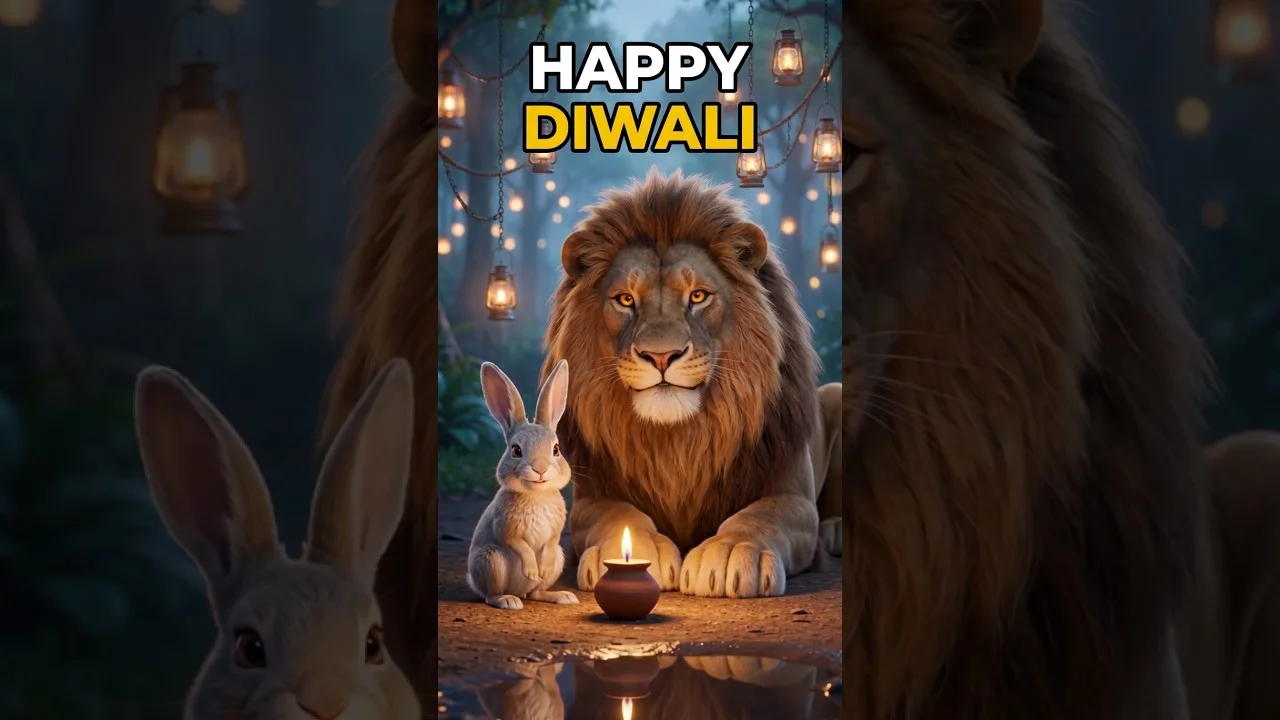
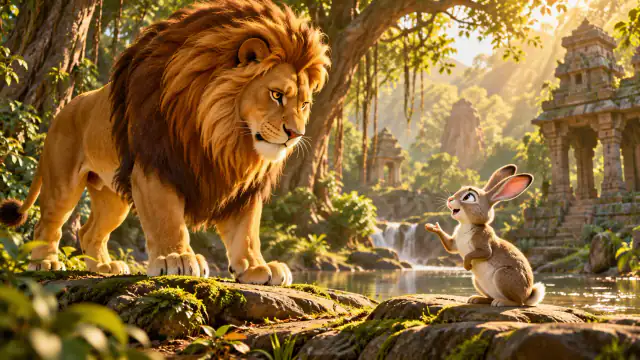
- The Lion and the Clever Rabbit. Wisdom finds a way where strength cannot. Chiku's calm thinking is a small light in a dark moment, and the two characters star in our Diwali Short.
- Manu and the Great Flood. The first episode of Before Rama, our series of traditional Indian legends that come before the story of Rama. It is a story of kindness that carries others through the darkest storm.
DIWALI SHORT
Watch the Diwali Short

Why Is the Lion Afraid of This Tiny Light? 🪔
Chiku lights one tiny diya on Diwali night, and Bhairav stops in his tracks.
Watch on YouTube Shorts
Talk about Diwali together
Read a story, then try one or two of these questions with your child or class.
- Why do people light lamps in the dark? What can a small light do?
- How can you be a light for someone this week, with a kind word or a small act?
- Families celebrate Diwali in different ways. What is one tradition in your family or a friend's?
- In the lion and rabbit story, what did Chiku use instead of strength?
- Why might it be kind to keep fireworks small or skip them?
More ways to share stories: print a free coloring page, try a story puzzle, or find questions and one-page packs for every story on the Parents & Teachers page.
Diwali FAQ
When is Diwali in 2026?
The main day of Diwali in 2026 is Sunday 8 November. Diwali follows the lunar calendar, so the date changes each year, and it can differ by a day depending on the region.
What does Diwali mean?
Diwali, also spelled Deepavali, comes from the Sanskrit word dipavali, which means a row of lamps. It is often called the festival of lights.
Why do people light diyas at Diwali?
A diya is a small lamp, usually made of clay, with oil or ghee and a cotton wick. Lighting diyas stands for light winning over darkness. In many homes it also welcomes guests and, for Hindu families, the goddess Lakshmi, and in some traditions it recalls the lamps lit for Rama's return to Ayodhya.
Is Diwali only a Hindu festival?
No. Diwali is most widely celebrated by Hindus, but Jains and Sikhs also mark it, each with their own meaning, and many people of other backgrounds join in the lights and sweets.
What is a good Diwali story for children?
The best-known Diwali story is the return of Rama to Ayodhya from the Ramayana. Fable Stories does not retell the Ramayana, but The Lion and the Clever Rabbit and Manu and the Great Flood share Diwali's themes of wisdom, kindness and light.
How can I explain Diwali to a young child?
Keep it simple: Diwali is the festival of lights, when families light small lamps to remember that light is stronger than darkness, share sweets and spend time together. Add one story or tradition at a time, and let the child help light a diya or choose rangoli colors.