Pick a story, then choose how to share it: watch the animation, read the story, play the puzzle, or print a one-page teacher pack, a picture book and coloring pages. Everything is free, with no sign-up.
Kindness to the smallest creature is never wasted; a compassionate heart that listens and acts with courage can carry others safely through the greatest storm.
Read or watch. Every story has a complete written retelling, and most also have a short animation.
Talk. Each story below has open questions that move from what happened to why, and then to what you would do. Pick the ones that suit your group, or print the one-page teacher pack to take them with you.
Play. Stories with a puzzle end with a four-question game. A video hint opens the relevant chapter, so nothing needs to be memorised.
Read the picture book. Some stories also have a free illustrated picture book. It is a shorter, simpler telling than the written retelling: read it page by page on a tablet, or print it for a quiet read-aloud.
Create. Print the free coloring pages for a quiet follow-up at home or in class.
Your puzzle answers and progress are not saved, and no sign-up is needed. The coloring pages and picture books are free for personal and classroom use.
The Monkey and the Crocodile
Themes: Quick thinking, Friendship, Trust
Moral: A quick mind can carry you through troubled waters.
Suggested ages: 6 to 9. Watch: 7:49. Read aloud: about 4 minutes.
Talk about it
Why did Kavi keep visiting Ranga?
When did Kavi first have a choice to say no to his wife?
What did Ranga notice that told him something was wrong?
Why did Ranga stay calm instead of shouting for help?
Was Ranga right not to forgive Kavi straight away?
Have you ever had to think fast when you were scared?
Try this: Act out the river crossing in pairs. Pause at the deepest water and let each child say what Ranga could try next.
Teacher pack: the summary, questions and activity on one printable page, with links to the story and coloring pages.A4 PDFUS Letter PDF
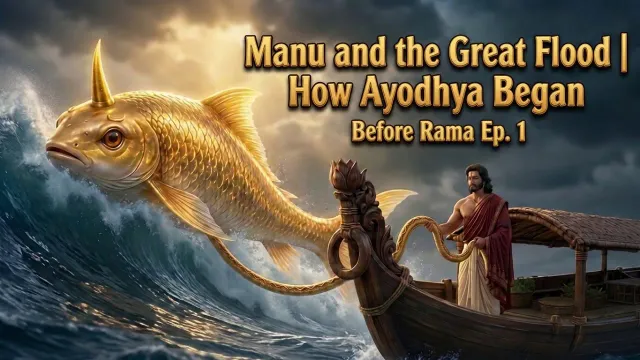
Moral: Kindness to the smallest creature is never wasted; a compassionate heart that listens and acts with courage can carry others safely through the greatest storm.
Suggested ages: 6 to 10. Watch: 4:22. Read aloud: about 4 minutes.
Talk about it
What did Satyavrata find in his hands, and what did he decide to do?
How did the fish change as the days went by?
What did Matsya ask the king to prepare, and why was it hard to trust a warning when the sky was clear?
How did the king stay calm during the flood?
Why do you think the story begins with one tiny fish instead of the flood?
What is one small kind thing you could do this week?
Try this: Make a kindness boat. Each child draws or writes one small kind act on a paper boat, then the group floats the boats on a tray of water and talks about how small acts can carry people a long way. Preview the flood scenes first with younger listeners.
Teacher pack: the summary, questions and activity on one printable page, with links to the story and coloring pages.A4 PDFUS Letter PDF
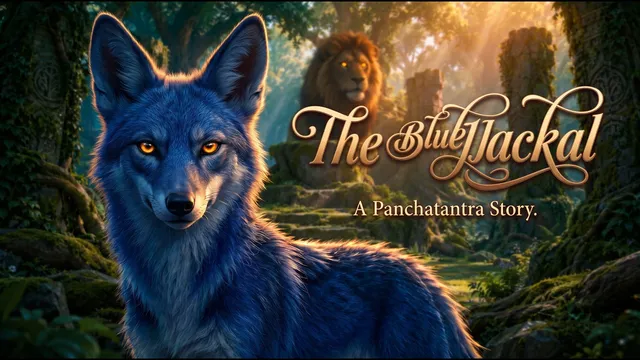
Moral: Pretending to be something you are not may bring temporary success, but your true nature eventually reveals itself.
Suggested ages: 6 to 10. Watch: 8:33. Read aloud: about 4 minutes.
Talk about it
How did Chandra become blue?
Why did the animals believe he had been sent from the heavens?
Why did Chandra send the other jackals away from the palace?
What happened when he heard the jackals howling?
Why did the animals stop trusting him?
Is it ever right to pretend to be someone else? What would you say to Chandra?
Try this: Once Chandra is blue, he calls himself Neelambar, the name the animals know him by. Make a list of what they could have asked Neelambar before they believed him. Which question would have been hardest for Chandra to answer?
Teacher pack: the summary, questions and activity on one printable page, with links to the story and coloring pages.A4 PDFUS Letter PDF
Moral: Do not dismiss something merely because it seems impossible. Test the truth before you judge it.
Suggested ages: 6 to 10. Watch: 4:43. Read aloud: about 6 minutes.
Talk about it
What was special about Sindhuka's feathers?
Why did Madan take the bird to the king instead of keeping it?
Why did Devraj refuse Madan's idea of keeping the bird for an hour?
What would the king have gained if he had tested the claim?
When is it fair to say something is impossible, and when should we check?
Think of a time you were sure about something and then learned you were wrong.
Try this: Test a claim like the king should have. Bridge a gap between two books with a flat sheet of paper, then with a sheet folded into pleats. Predict which holds more coins, add coins one at a time, and write down what actually happened.
Teacher pack: the summary, questions and activity on one printable page, with links to the story and coloring pages.A4 PDFUS Letter PDF
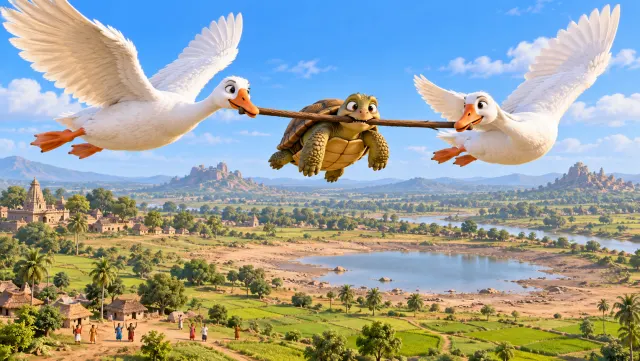
The Talkative Tortoise (The Tortoise and the Geese)
Themes: Self-control, Listening, Patience
Moral: Wisdom is not only knowing what to say; it is knowing when silence protects what matters most.
Suggested ages: 5 to 8. Read aloud: about 3 minutes.
Talk about it
Why did Kambu need to leave his lake?
What was the one rule for the flight?
What did the people below say, and how did Kambu feel?
What did Kambu do differently on the second flight?
Is there something you do when you want to answer quickly but should wait?
Try this: Play Silent Tortoise. Everyone is Kambu on the stick: stay quiet while the teacher asks easy questions, and speak only after the signal, such as a raised hand. Then talk about how it felt to wait.
Teacher pack: the summary, questions and activity on one printable page, with links to the story and coloring pages.A4 PDFUS Letter PDF
Videos play in YouTube's privacy-enhanced player (youtube-nocookie.com) with related videos limited to Fable Stories' own channel. Nothing plays automatically when a page opens. The puzzle's video hint starts that story's video at the right moment, and you can pause it at any time. YouTube, not Fable Stories, decides whether ads appear. If YouTube is blocked at your school, every story also has a full written retelling, and the picture books and coloring pages are plain PDFs.
Where these stories fit the curriculum
United States: Common Core RL.1.2, RL.2.2, RL.3.2. Retell stories and fables from diverse cultures and identify the central message, lesson or moral.
England: National Curriculum, English, Years 1 and 2. Become familiar with traditional tales and retell them, then a wider range of them in Year 2.
India: NCERT Class 6 English reader A Pact with the Sun. Includes "The Monkey and the Crocodile", a Panchatantra tale, which this site tells too.
These are suggestions for where fables fit, not an endorsement by any education body.
THE WONDER DOESN’T END HERE
The next story is already waiting.
More clever characters. More unforgettable adventures. Subscribe to Fable Stories and let the stories find you.