BEHIND THE ADVENTURE
The Blue Jackal: summary and moral
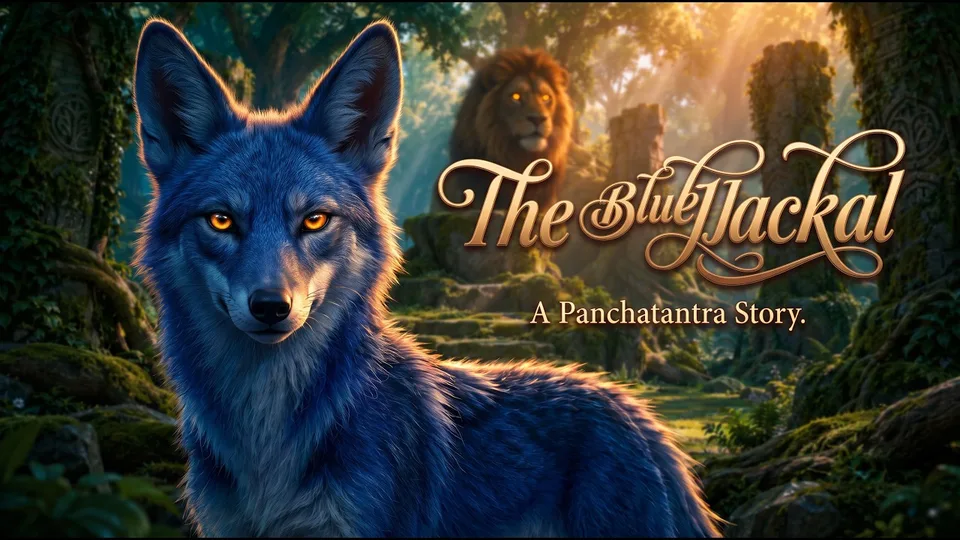
After a narrow escape leaves Chandra dyed bright blue, the animals mistake him for a mysterious king named Neelambar. A Panchatantra story about identity, honesty, and pride.
Moral: Pretending to be something you are not may bring temporary success, but your true nature eventually reveals itself.
Retelling and story notes by Fable Stories. Language: English. Animation length: 8:33.
Story origin: A modern animated retelling inspired by the traditional Panchatantra tale of the blue jackal.
The Story Begins
Chandra is an ordinary jackal searching for food near a village when a pack of angry dogs gives chase. He runs wherever he can, slips into a dyer's yard, and tumbles into a barrel. By the time he escapes, his fur has turned a brilliant blue unlike anything the forest animals have ever seen.
The lions, tigers, and other animals do not recognize him. Seeing their amazement, Chandra introduces himself as Neelambar, a special ruler sent to become king of the forest. His unusual appearance gives the story a magical beginning, but the crown rests on a secret that becomes harder to hide with every passing day.
Meet the Characters
Chandra is quick enough to recognize an opportunity and bold enough to seize it. As Neelambar, he discovers how easily an impressive appearance can influence others. Yet the further he moves from the truth, the more effort it takes to protect his new identity.
The forest animals see a colour they have never encountered and assume it must belong to someone powerful. Their reaction invites us to ask how first impressions shape our judgment, and why a confident claim can sound convincing even before anyone checks whether it is true.
What Makes This Story Special
The Blue Jackal is a memorable Panchatantra story because one vivid image carries so many ideas. A coat of blue fur changes the way everyone treats Chandra, although the jackal beneath it has not changed at all. Children can enjoy the humour and suspense while older viewers notice the story's questions about status, belonging, and trust.
The animated forest makes Chandra's transformation especially striking. Watch how his posture and voice change when the other animals begin to obey him. Then listen for the sound that connects him to who he has always been. The smallest natural impulse can be stronger than the grandest performance.
The Moral
A false identity may win attention for a while, but it cannot create lasting respect. Honesty gives relationships a foundation; pretending asks others to trust something that is not real. The fable also reminds us to look beyond appearances before deciding who deserves our confidence.
What We Can Learn
After watching, discuss why the animals believed Chandra and what they could have asked before accepting his story. Think about the moment when keeping the secret becomes impossible. The tale opens a useful conversation about being comfortable with who we are, telling the truth, and judging character through actions rather than appearance.
A LITTLE WISDOM TO KEEP
“Pretending to be something you are not may bring temporary success, but your true nature eventually reveals itself.”