
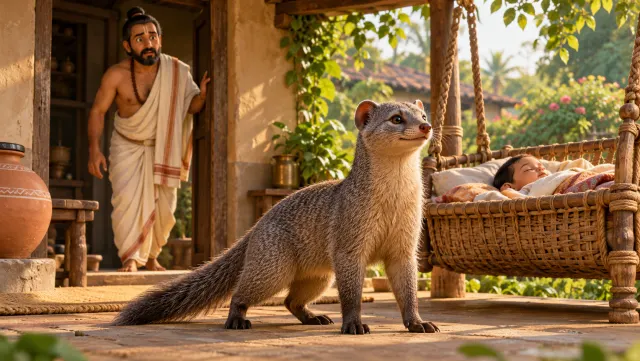
What is the Panchatantra?
The Panchatantra is a collection of animal fables from ancient India, told in five books. Its name comes from Sanskrit and means roughly “five treatises”. Each story shows a character facing a choice about friendship, trust, courage, patience or fairness, and each ends with a lesson that is easy to remember.
Most of the characters are animals, such as a clever rabbit, a quick-thinking monkey or a boastful jackal. They speak and act like people, which lets a reader look at pride, greed or kindness from a safe distance. A listener can laugh at a foolish lion and still recognize the same mistake in everyday life.
Scholars usually place the original Sanskrit work somewhere between about 300 BCE and 300 CE, and the exact date is uncertain. The collection traveled far beyond India. It was translated into Middle Persian in the 6th century CE and then into Arabic as Kalila wa Dimna in the 8th century, and from there its tales spread across the Middle East and Europe. Many fables that families know today can be traced back to this long journey.
Who wrote the Panchatantra?
According to tradition, the Panchatantra was written by a scholar named Vishnu Sharma. Nothing about him can be confirmed, and scholars generally treat the collection as the work of an author or authors whose names and dates are unknown. The attribution to Vishnu Sharma is best understood as part of the story the book tells about itself.
That story is the frame of the whole work. A king had three sons who showed no interest in learning, and he worried that they were not ready to rule. A wise teacher, Vishnu Sharma, promised to make them clever in a short time. Instead of lecturing, he told them fables, and each tale led into another, so the lessons about people, power and judgment arrived inside adventures the princes wanted to hear.
This frame explains why the Panchatantra is built the way it is. It is a book of practical wisdom first, written for young rulers. The animals carry the advice, and the structure of tales within tales keeps the reader curious.
Read the full account of the king, the three princes and their teacher on our page about who wrote the Panchatantra.
The five books of the Panchatantra
The Panchatantra is divided into five books. Each has a Sanskrit name, an English meaning and a central theme, and the stories inside it explore that theme from different sides. The list below gives all five, with our own retellings linked where a story belongs to that book.
Book 1: Mitrabheda (The Loss of Friends)
Theme: How cunning and gossip can break a friendship, and how quick thinking can answer a stronger opponent. The first and longest book shows how a clever schemer can turn friends against each other. It also contains tales in which a small, thoughtful character defeats a much stronger one.
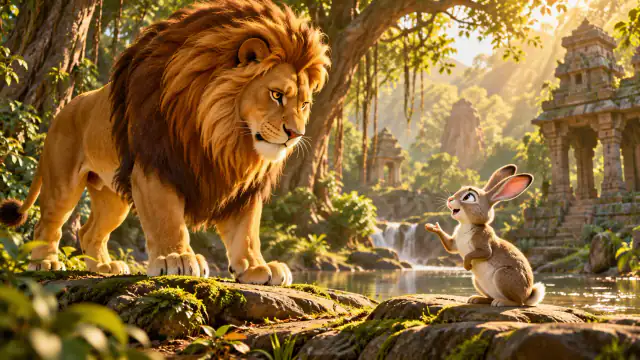
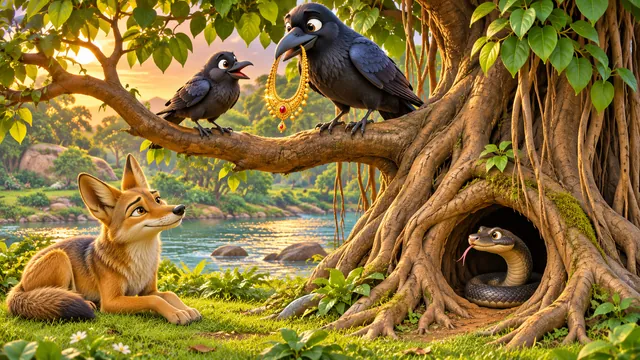
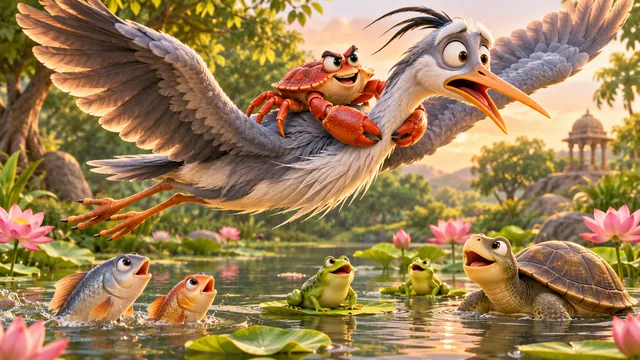
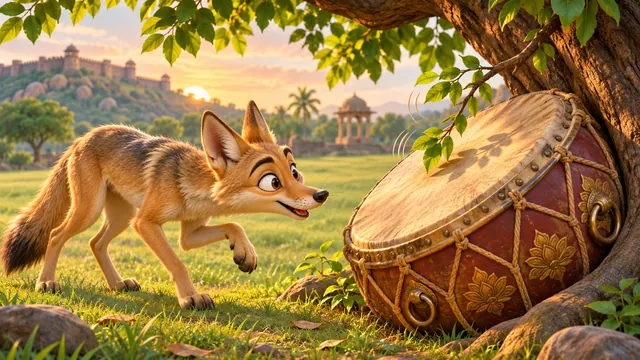
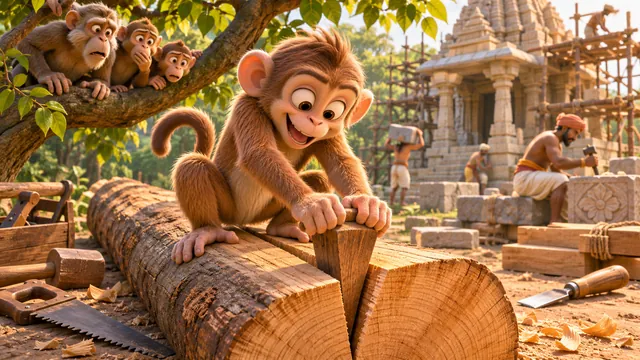
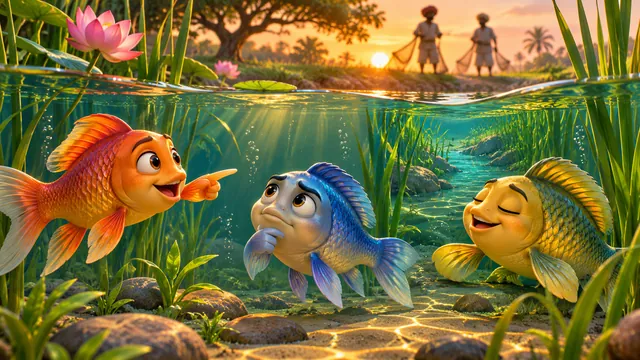
Our stories from this book: The Lion and the Clever Rabbit, The Crows and the Serpent, The Heron and the Crab, The Jackal and the Drum, The Monkey and the Wedge, The Three Fish.
Book 2: Mitrasamprapti (The Winning of Friends)
Theme: Loyalty, cooperation and the value of true friends. The second book is the opposite of the first. It follows animals who find strength by trusting one another and working together when danger comes.
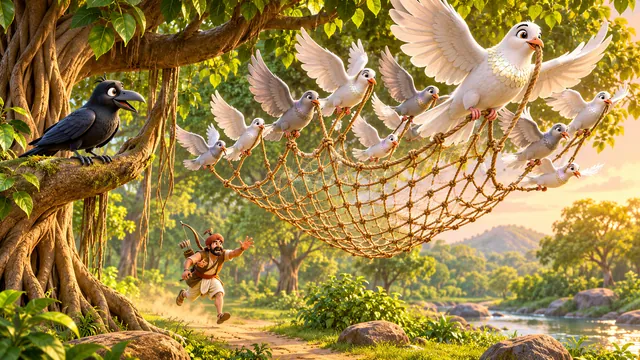
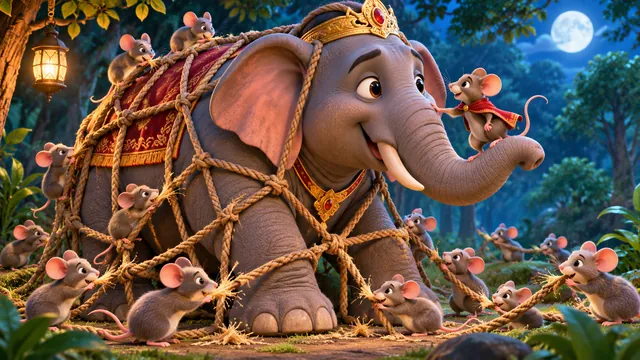
Our stories from this book: The Four Friends and the Hunter, The Doves and the Hunter, The Mice and the Elephants.
Book 3: Kakolukiyam (Crows and Owls)
Theme: Rivalry, strategy, and when to make peace or war. The third book is built around a conflict between crows and owls. It asks how a ruler should judge an enemy's offer of friendship and plan carefully before acting.
We have not yet published a story from this book. New Panchatantra retellings are added to the library over time.
Book 4: Labdhapranasam (Loss of Gains)
Theme: Keeping what you have by thinking clearly under pressure. The fourth book follows characters who risk losing something precious through carelessness or flattery, and who protect it with a quick, calm mind.
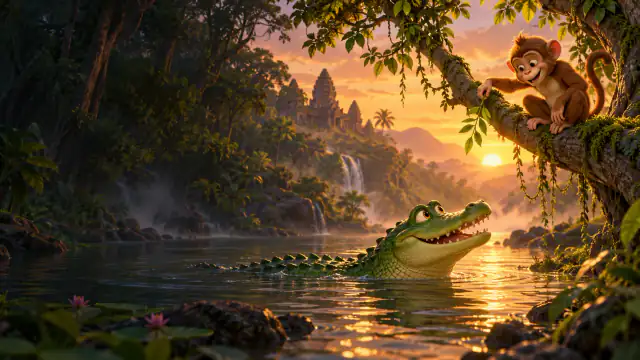
Our stories from this book: The Monkey and the Crocodile.
Book 5: Aparikshitakarakam (Ill-Considered Action)
Theme: Acting without thinking, and the regret that follows. The fifth book warns against hasty decisions. Its characters learn, often too late, why it is wise to look at the facts before acting.
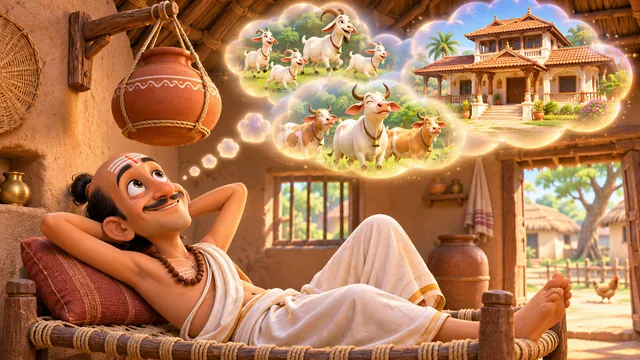
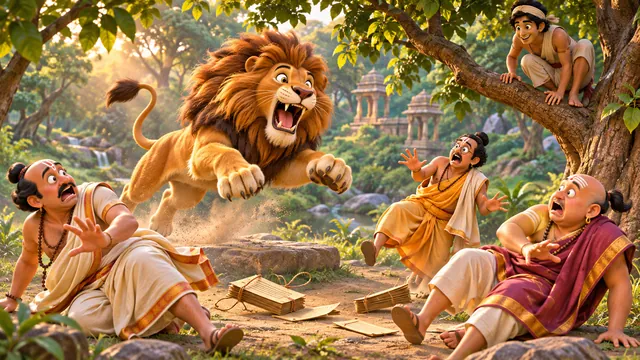
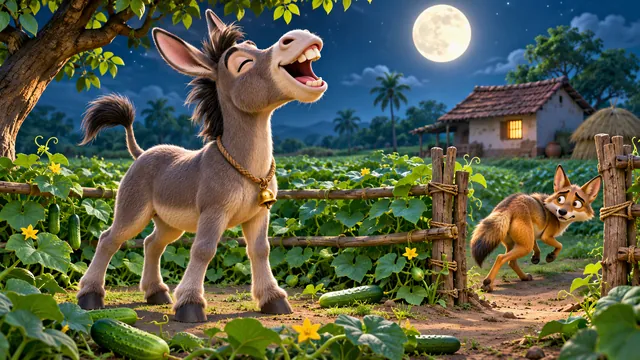
Our stories from this book: The Brahmin's Dream, The Four Brahmins and the Lion, The Musical Donkey, The Brahmin and the Mongoose.
Editions and later retellings arrange the tales differently, so we name a book for a story only where we are confident of its place. That is why a few of our stories show no book in the table below.
Our Panchatantra stories at a glance
This table lists every Panchatantra story in our library with its book, moral, themes, suitable ages and video length. Each story title links to the full retelling.
| Story | Book | Moral | Themes | Suitable ages | Video length |
|---|---|---|---|---|---|
| The Monkey and the Crocodile | Book 4: Labdhapranasam | A quick mind can carry you through troubled waters. | Quick thinking, Friendship, Trust | 6 to 9 years | 7:50 |
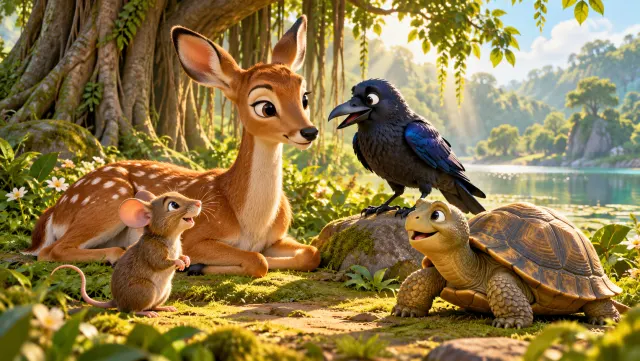
| The Four Friends and the Hunter | Book 2: Mitrasamprapti | Friends do not need the same strengths; when each person contributes what they can, even a difficult problem becomes possible to solve. | Friendship, Teamwork, Courage | 4 to 8 years | 4:03 |
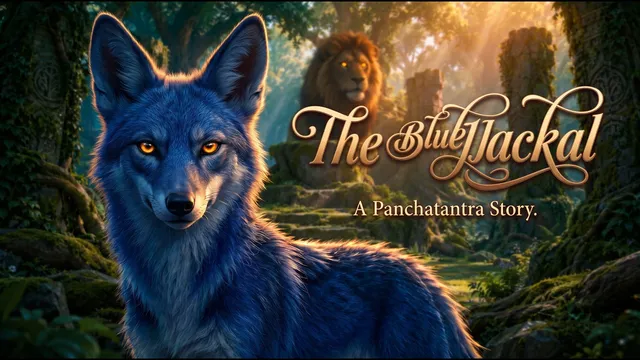
| The Blue Jackal | Not listed | Pretending to be something you are not may bring temporary success, but your true nature eventually reveals itself. | Honesty, Identity, Pride | 6 to 10 years | 8:33 |
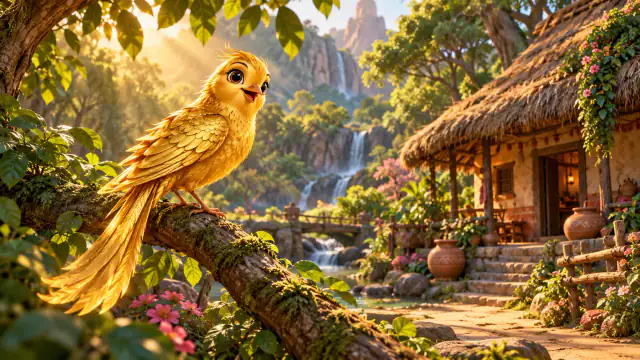
| The Bird with Golden Feathers | Not listed | Do not dismiss something merely because it seems impossible. Test the truth before you judge it. | Wisdom, Evidence, Humility | 6 to 10 years | 4:43 |
| The Lion and the Clever Rabbit | Book 1: Mitrabheda | Wisdom finds a way where strength cannot. | Intelligence, Courage, Pride | 6 to 10 years | 6:30 |
| The Brahmin's Dream | Book 5: Aparikshitakarakam | Plans are good, but do not count on riches you have not earned yet; begin with the first real step. | Daydreams, Patience, Small steps | 5 to 8 years | Story to read |
| The Crows and the Serpent | Book 1: Mitrabheda | When you cannot match an opponent's strength, a careful plan can do what force cannot. | Planning, Cleverness, Courage | 5 to 8 years | Story to read |
| The Doves and the Hunter | Book 2: Mitrasamprapti | Unity is strength: together the small can do what none can do alone, and a good leader thinks of others first. | Unity, Friendship, Leadership | 5 to 8 years | Story to read |
| The Four Brahmins and the Lion | Book 5: Aparikshitakarakam | Knowledge without common sense is dangerous; think about what will happen before you use what you know. | Common Sense, Knowledge, Thinking Ahead | 5 to 8 years | Story to read |
| The Heron and the Crab | Book 1: Mitrabheda | Do not trust sweet words from someone who gains by your trust; look for proof, and stay alert. | Trust, Alertness, Honesty | 5 to 8 years | Story to read |
| The Jackal and the Drum | Book 1: Mitrabheda | Do not be frightened by a noise alone; find out what is really there. Big and loud does not mean strong or full. | Courage, Curiosity, Judgment | 5 to 8 years | Story to read |
| The Mice and the Elephants | Book 2: Mitrasamprapti | No friend is too small; kindness given freely comes back when you need it most. | Kindness, Friendship, Gratitude | 5 to 8 years | Story to read |
| The Monkey and the Wedge | Book 1: Mitrabheda | Do not meddle in things that are not your business and that you do not understand. | Curiosity, Listening, Caution | 5 to 8 years | Story to read |
| The Musical Donkey | Book 5: Aparikshitakarakam | There is a right time and place for everything; listen when a good friend warns you. | Good Advice, Right Time and Place, Friendship | 5 to 8 years | Story to read |
| The Three Fish | Book 1: Mitrabheda | Plan ahead when you see trouble coming; quick thinking can save you, but waiting for luck is the riskiest choice of all. | Planning Ahead, Quick Thinking, Responsibility | 5 to 8 years | Story to read |
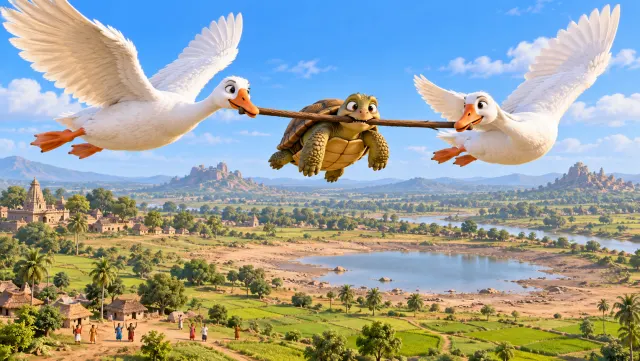
| The Talkative Tortoise (The Tortoise and the Geese) | Not listed | Wisdom is not only knowing what to say; it is knowing when silence protects what matters most. | Self-control, Listening, Patience | 5 to 8 years | Story to read |
| The Brahmin and the Mongoose | Book 5: Aparikshitakarakam | A frightening first impression is not the whole truth; pause, examine the evidence, and understand before you act. | Loyalty, Patience, Judgment | 7 to 10 years | Story to read |
Which Panchatantra story should you read first?
Start with the lesson you want to talk about. For honesty, choose The Blue Jackal. For teamwork, read The Four Friends. For careful judgment, read The Brahmin and the Mongoose, and for trust and quick thinking, read The Monkey and the Crocodile.
The Talkative Tortoise, also known as The Tortoise and the Geese, is one story with two names. It shows why patience and self-control matter. For intelligence overcoming strength, read The Lion and the Clever Rabbit, and to learn why we should test the truth before judging it, read The Bird with Golden Feathers.
Panchatantra characters and coloring pages
Meet characters from our Panchatantra retellings and see one coloring preview from each story. Every picture is original Fable Stories artwork and carries our name. Select a character to read about them, or select a coloring preview to explore its free printable pack.
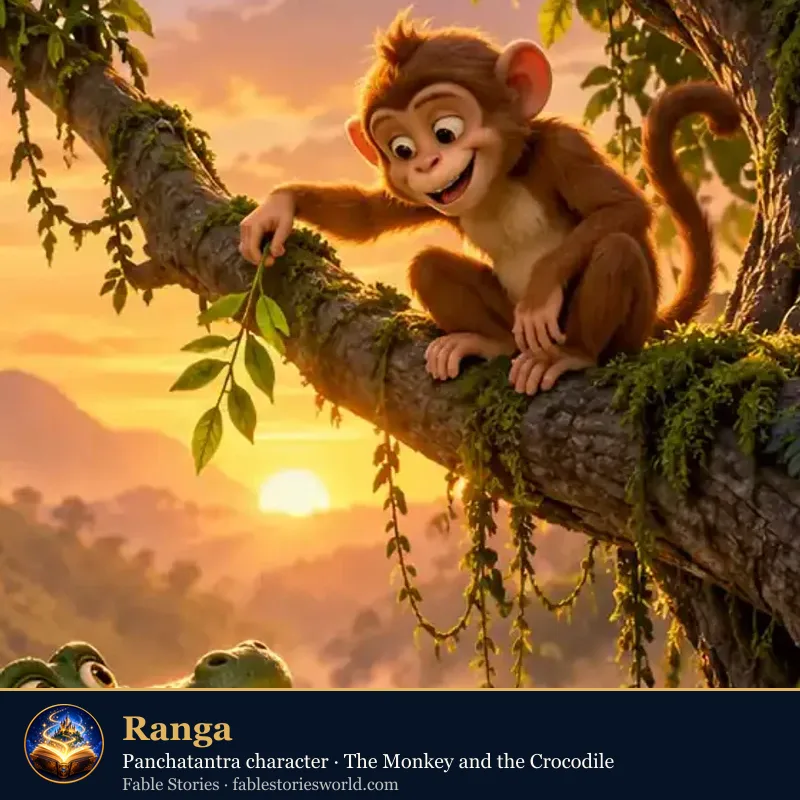
Ranga, the quick thinker, from The Monkey and the Crocodile 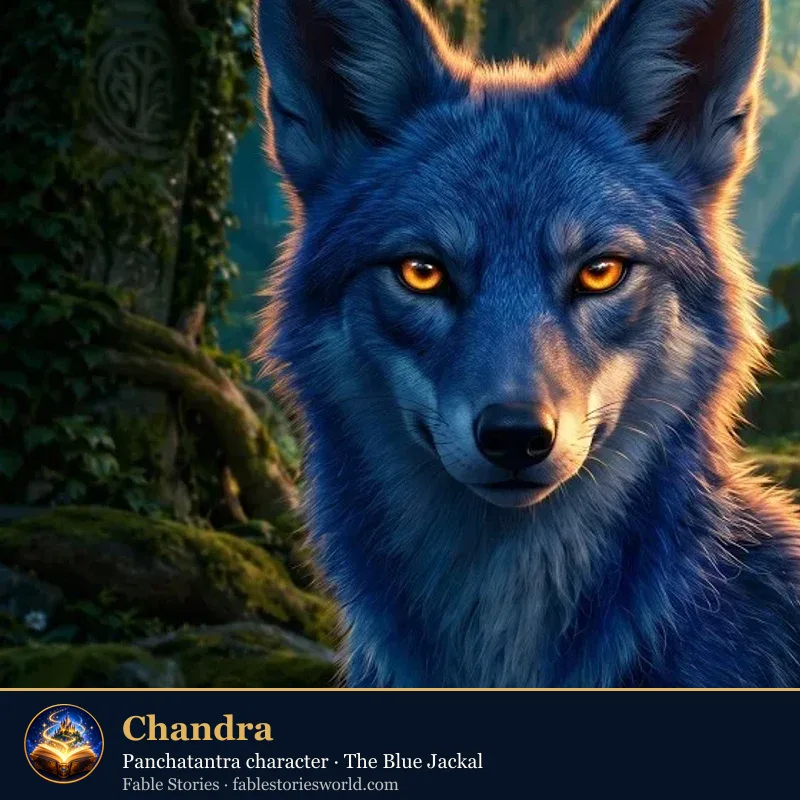
Chandra, the jackal behind the disguise, from The Blue Jackal 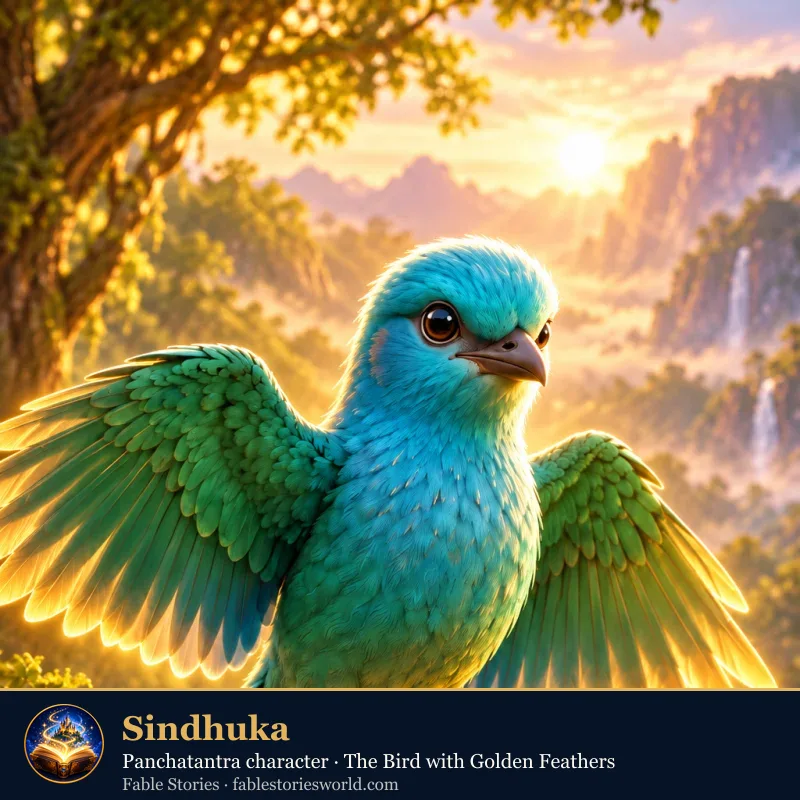
Sindhuka, the bird whose feathers turn to gold, from The Bird with Golden Feathers 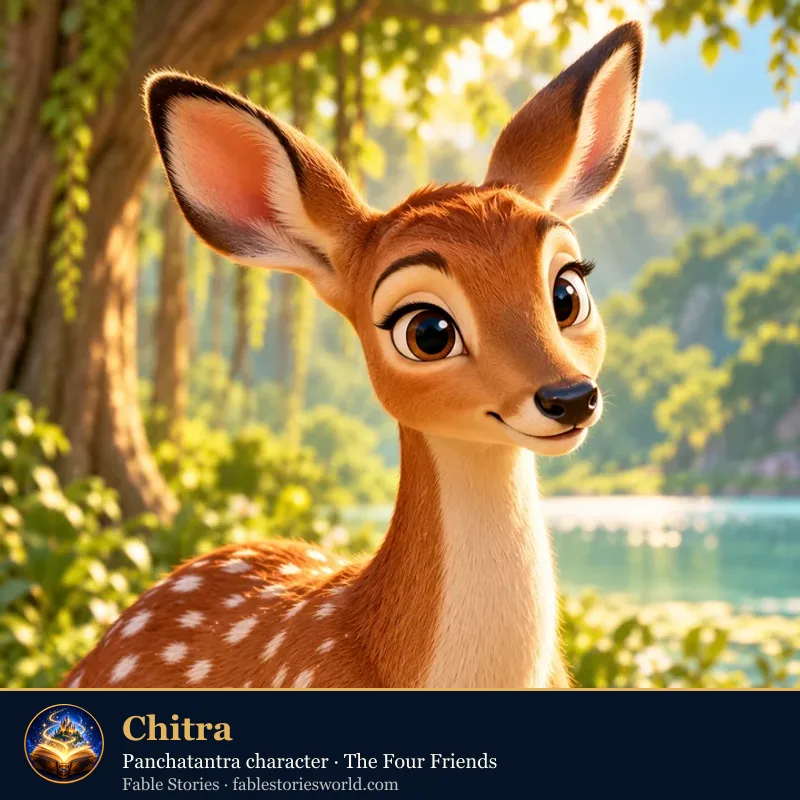
Chitra, the swift and courageous deer, from The Four Friends 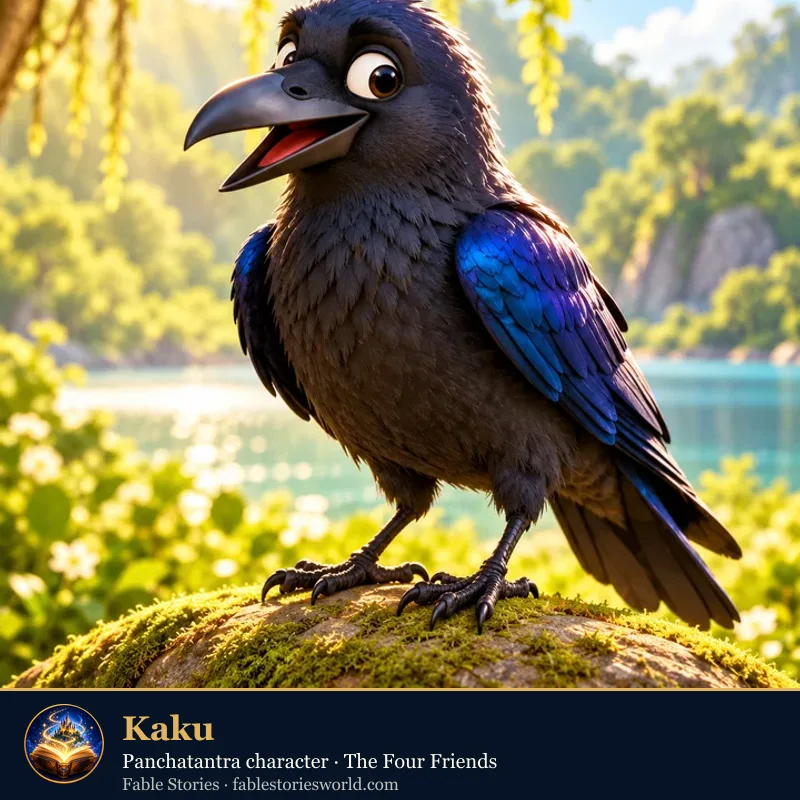
Kaku, the watchful crow, from The Four Friends 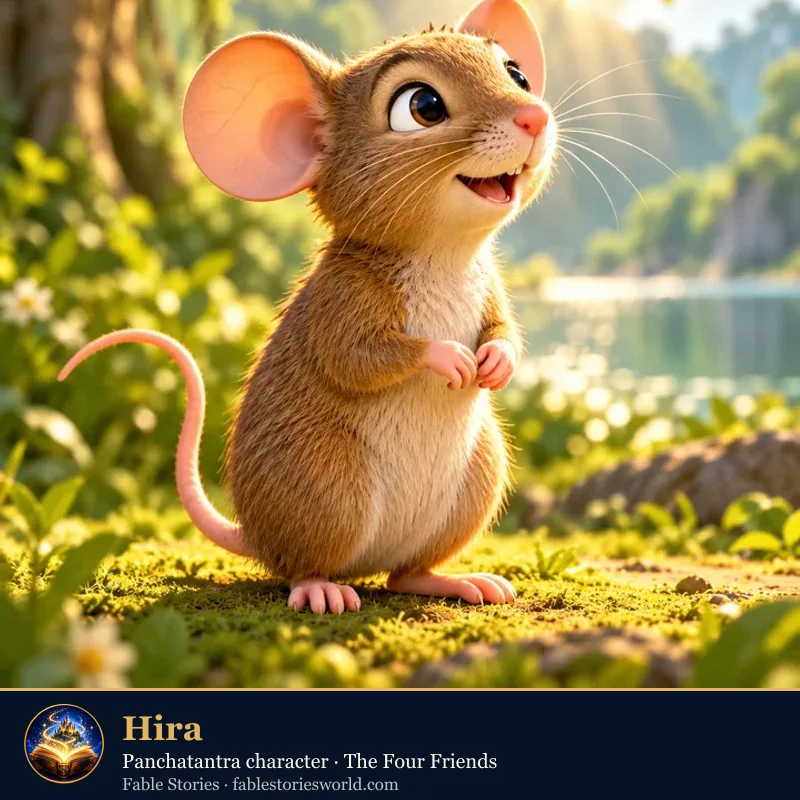
Hira, a small mouse and a mighty rescuer, from The Four Friends 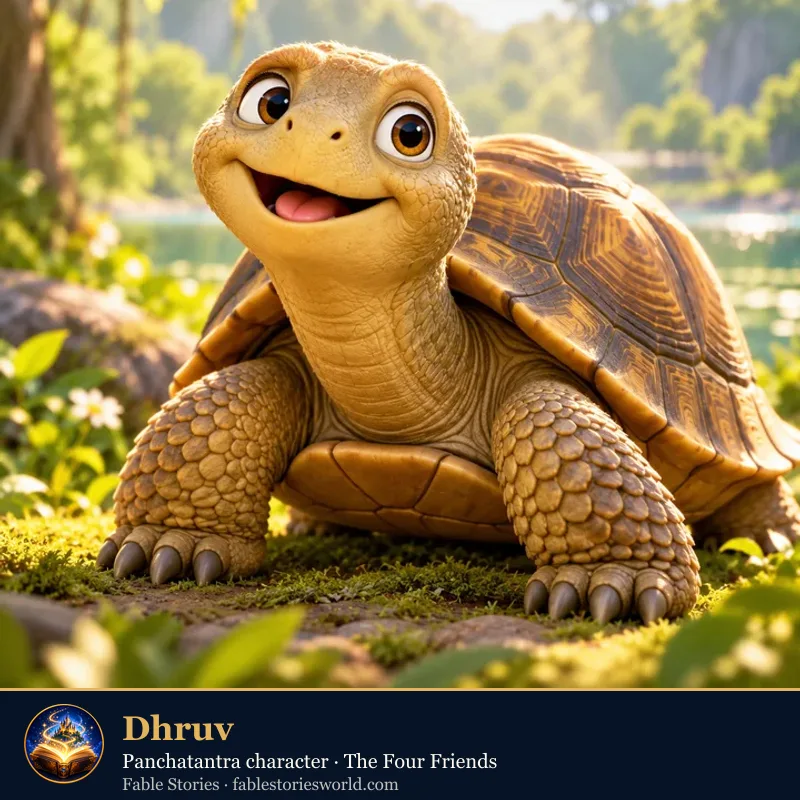
Dhruv, the patient and loyal tortoise, from The Four Friends 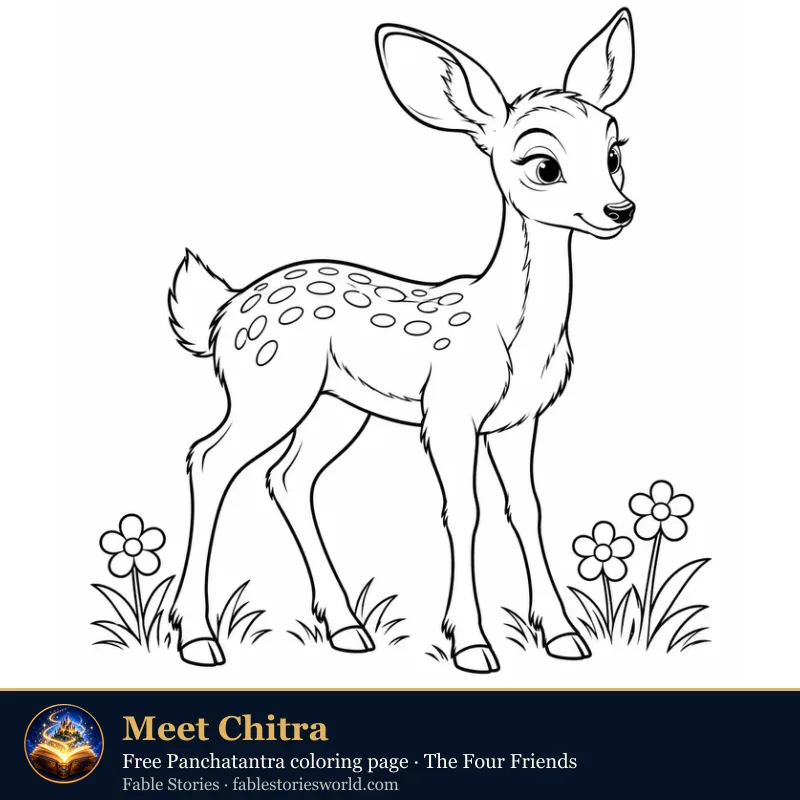
Meet Chitra, a free coloring page from The Four Friends 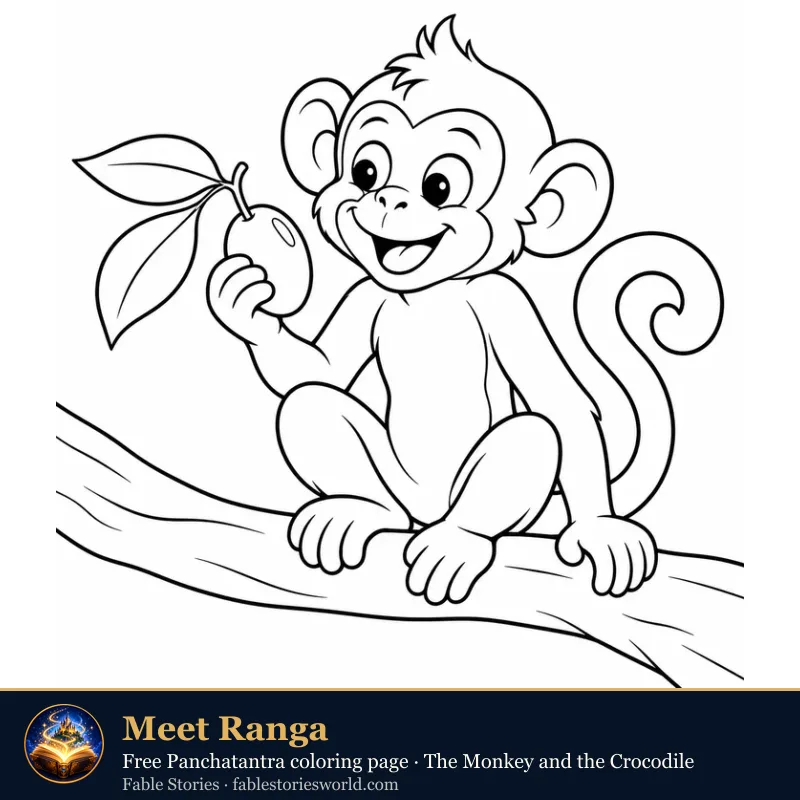
Meet Ranga, a free coloring page from The Monkey and the Crocodile 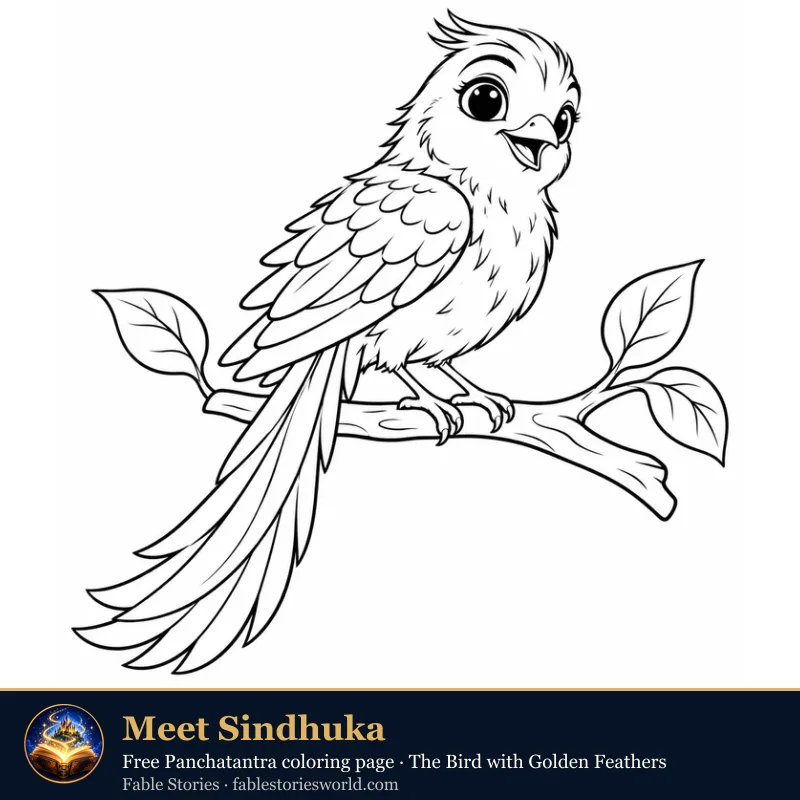
Meet Sindhuka, a free coloring page from The Bird with Golden Feathers 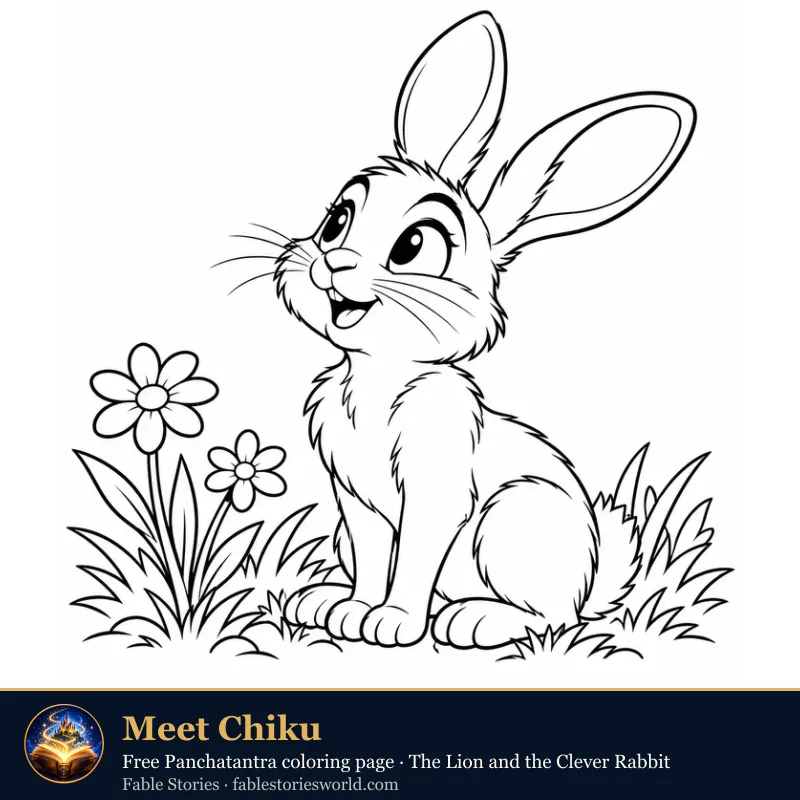
Meet Chiku, a free coloring page from The Lion and the Clever Rabbit 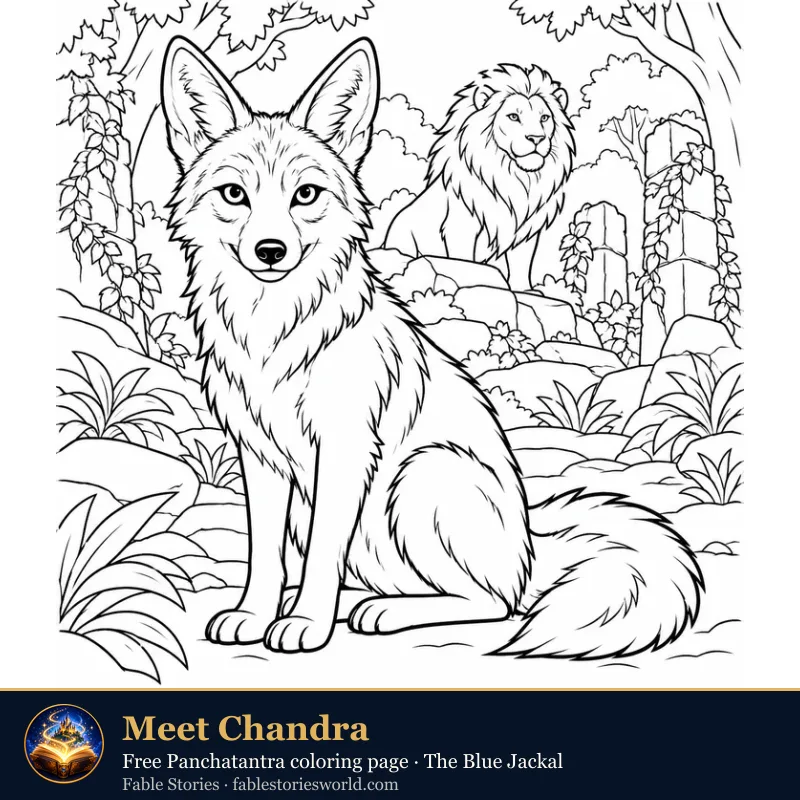
Meet Chandra, a free coloring page from The Blue Jackal 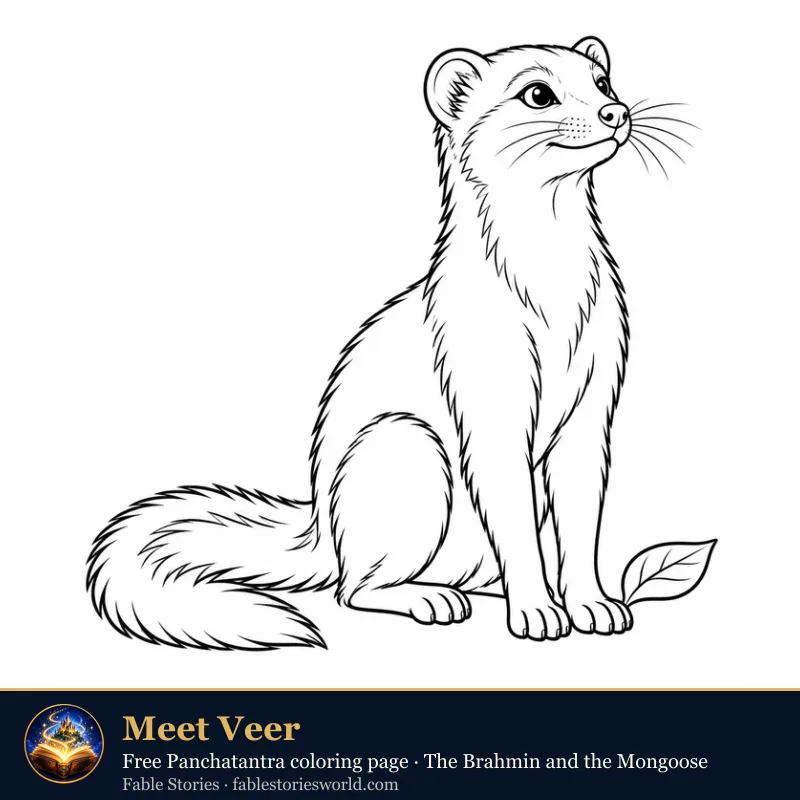
Meet Veer, a free coloring page from The Brahmin and the Mongoose 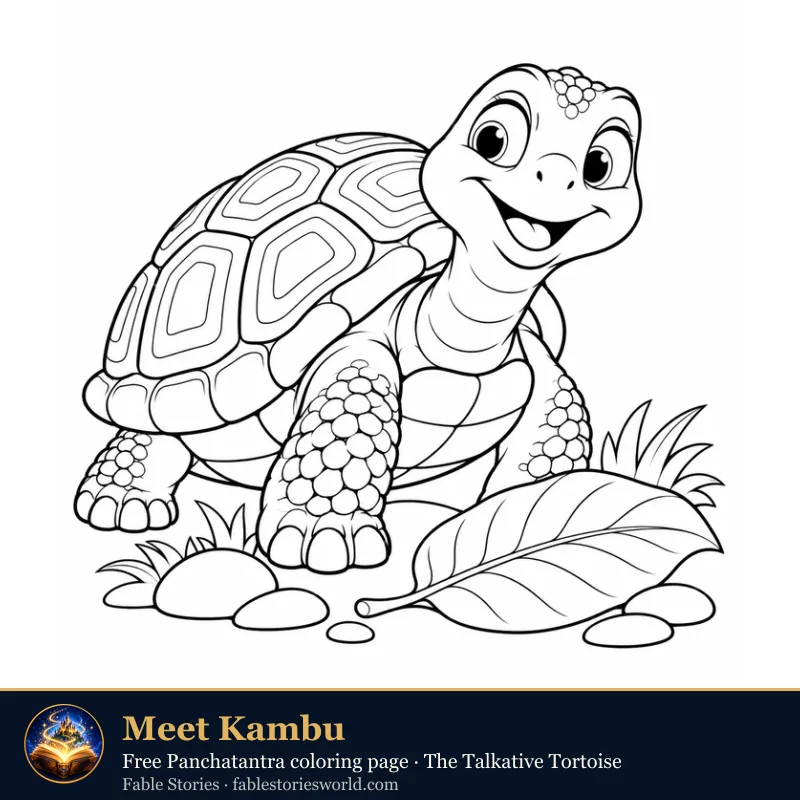
Meet Kambu, a free coloring page from The Talkative Tortoise 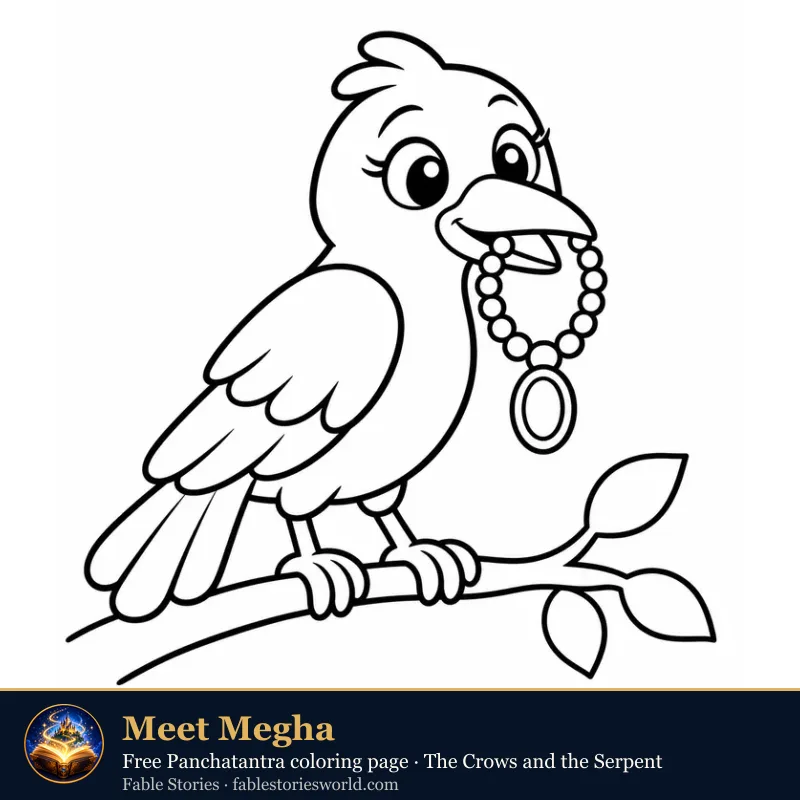
Meet Megha, a free coloring page from The Crows and the Serpent 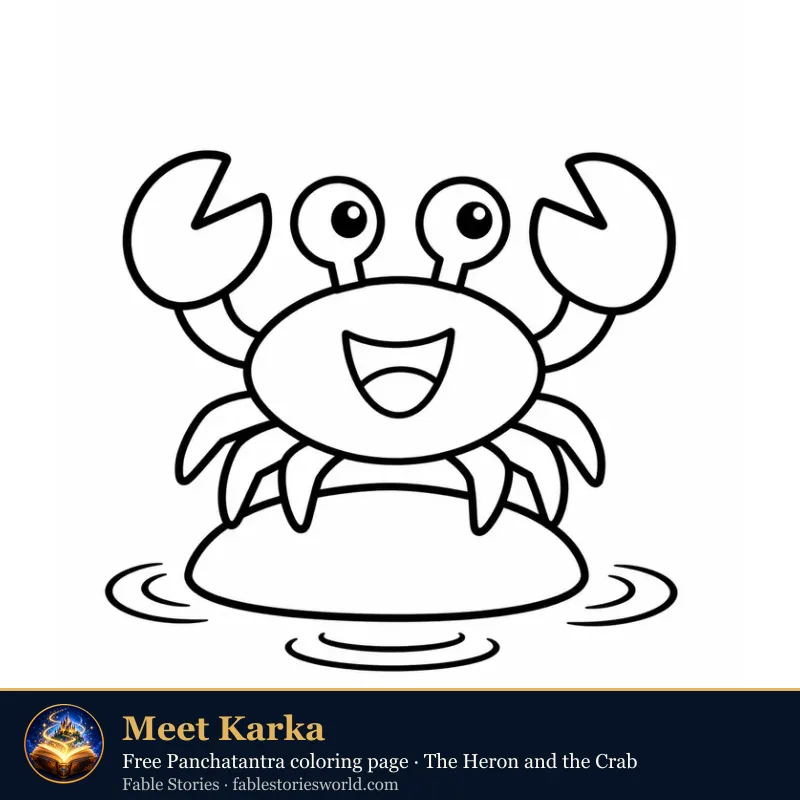
Meet Karka, a free coloring page from The Heron and the Crab 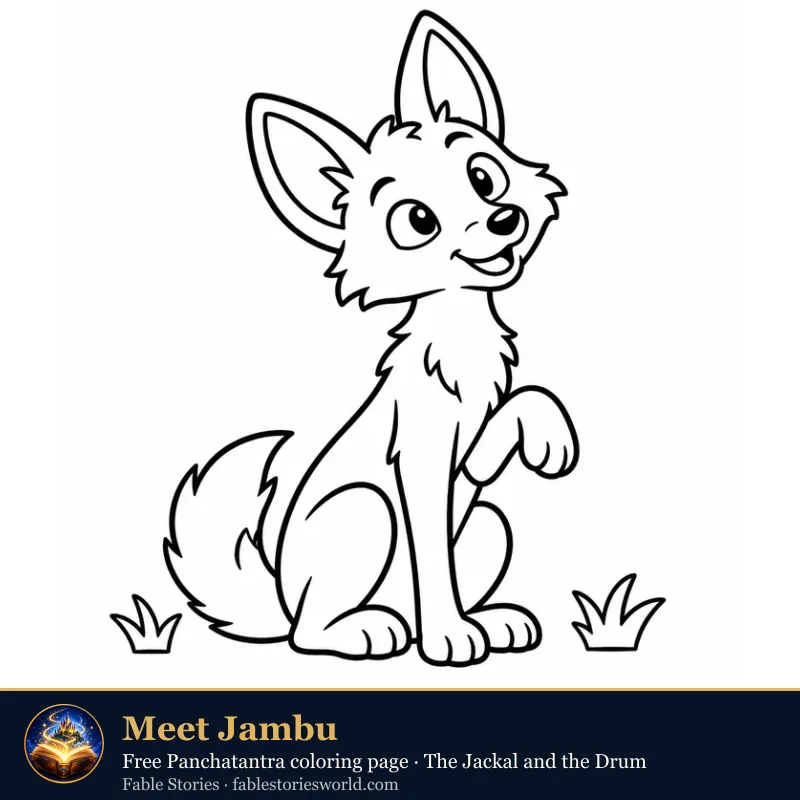
Meet Jambu, a free coloring page from The Jackal and the Drum 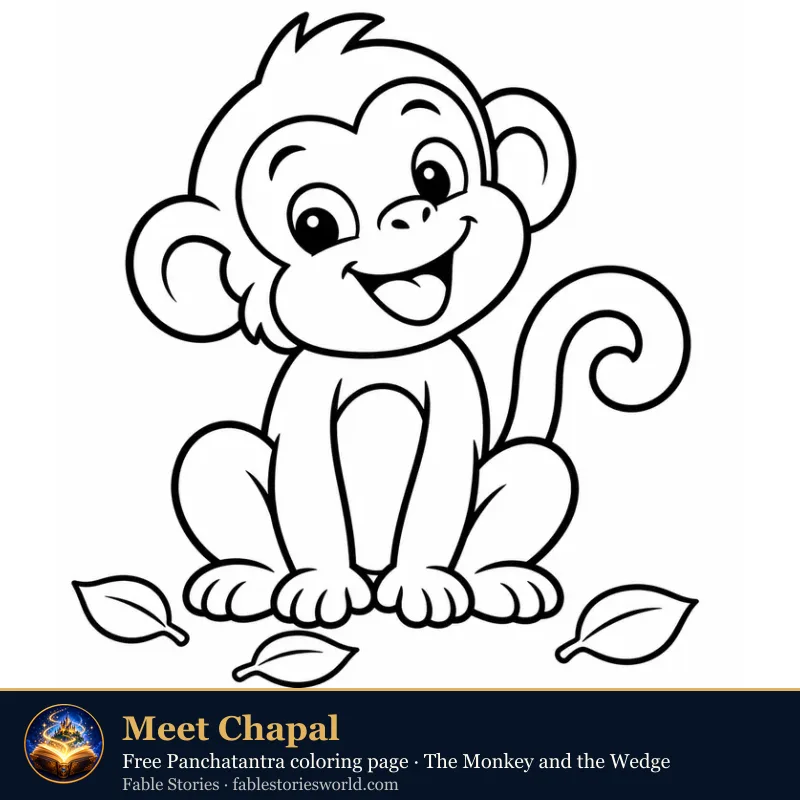
Meet Chapal, a free coloring page from The Monkey and the Wedge 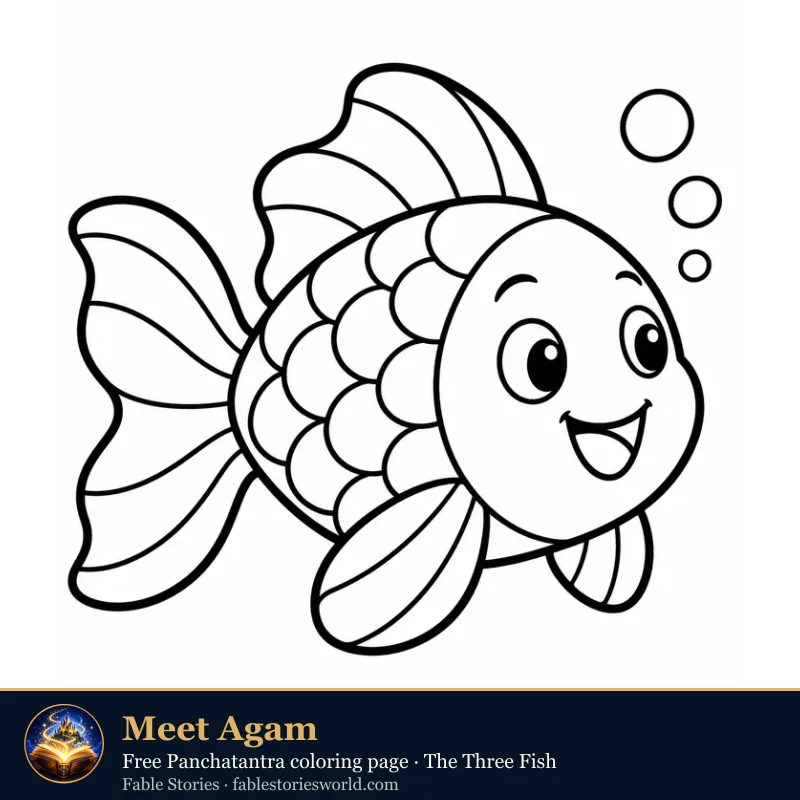
Meet Agam, a free coloring page from The Three Fish 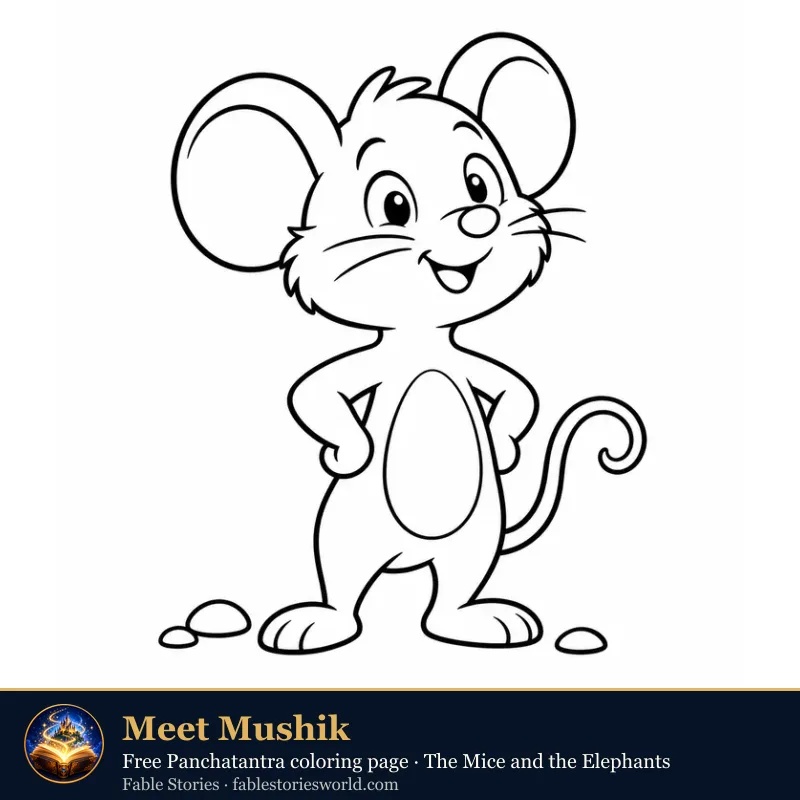
Meet Mushik, a free coloring page from The Mice and the Elephants 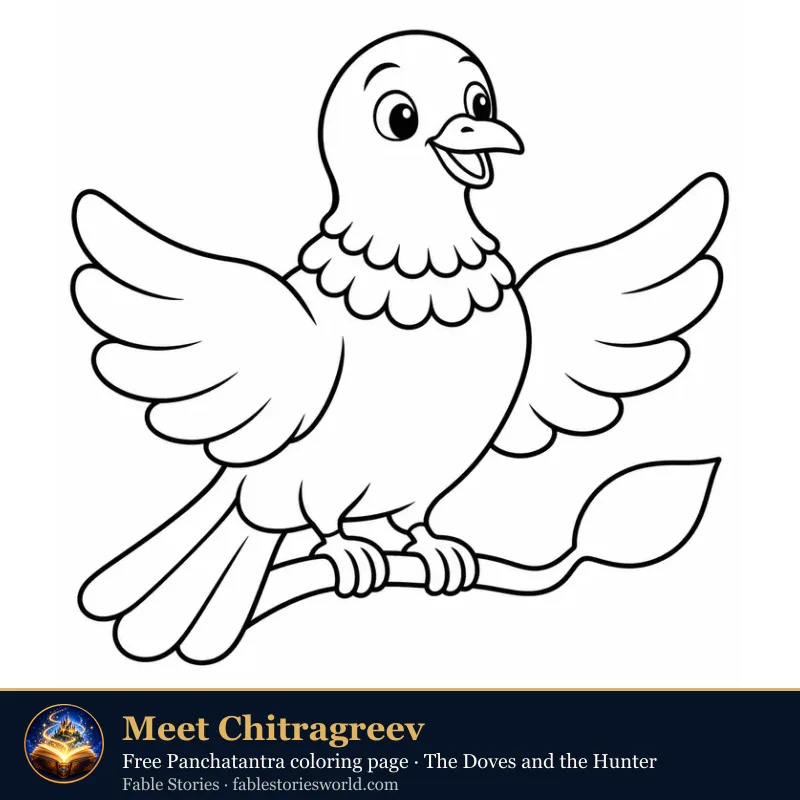
Meet Chitragreev, a free coloring page from The Doves and the Hunter 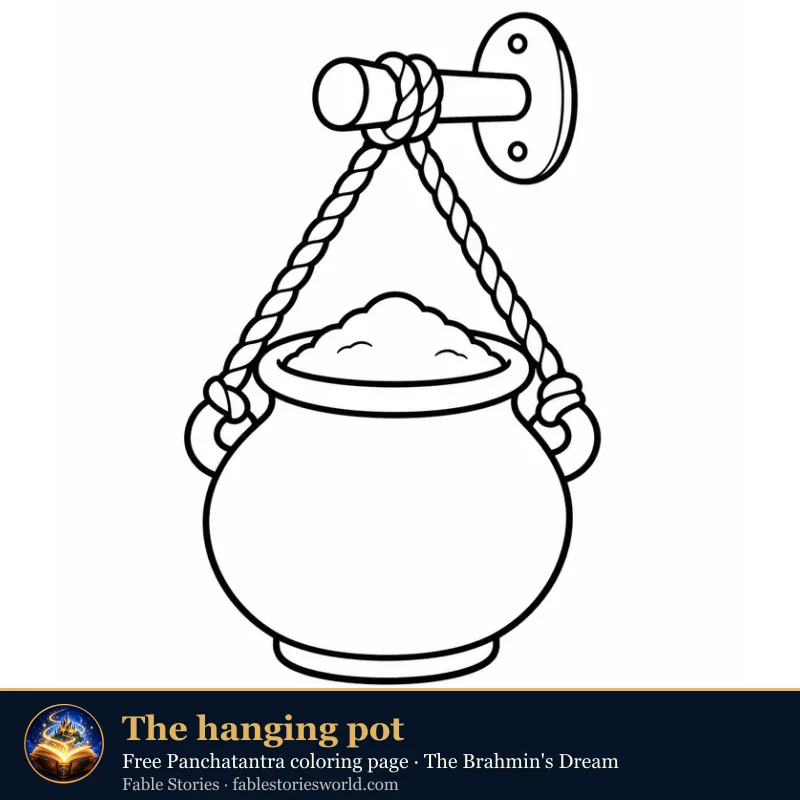
The hanging pot, a free coloring page from The Brahmin's Dream 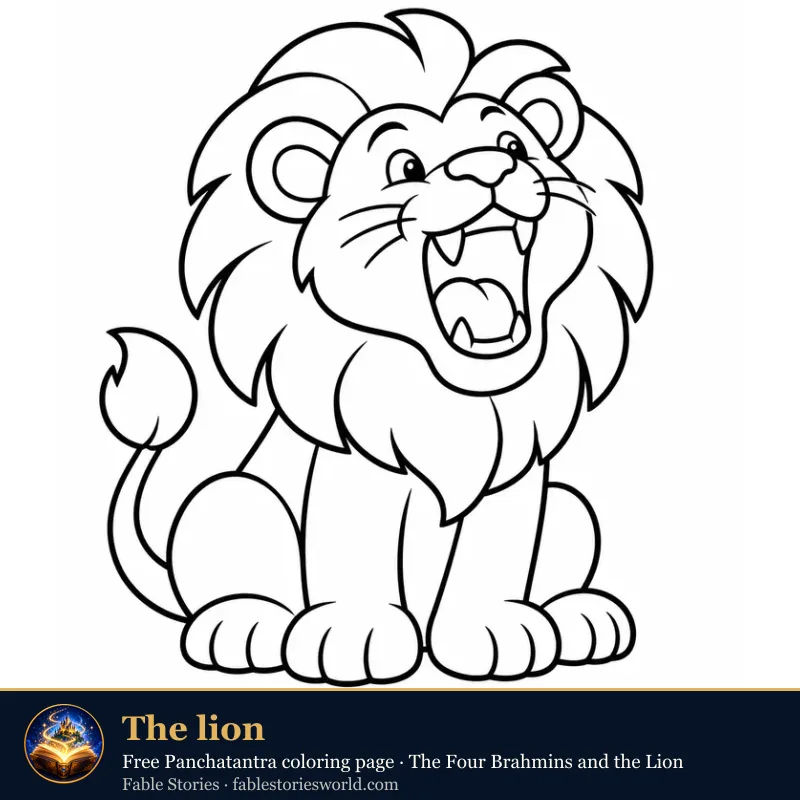
The lion, a free coloring page from The Four Brahmins and the Lion 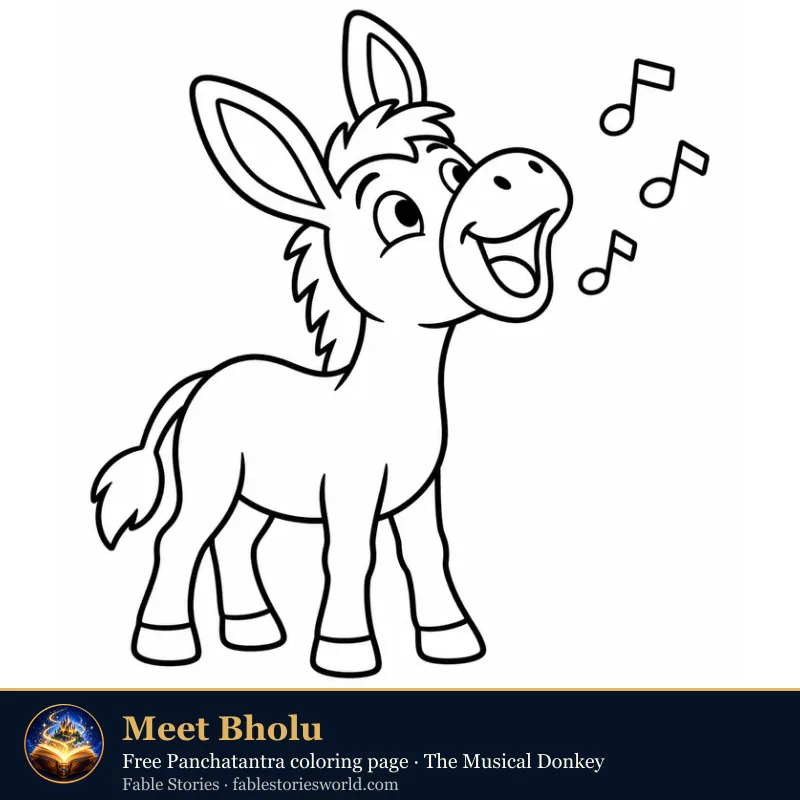
Meet Bholu, a free coloring page from The Musical Donkey
What the Panchatantra teaches
Across all five books, the Panchatantra keeps returning to a handful of ideas. The first is to think before acting: many characters run into trouble because they trust a rumor, rush a decision or ignore a warning. The second is that friendship takes care. Loyal friends can solve problems that a strong individual cannot, and a single careless word can damage trust that took years to build.
A third lesson is that cleverness can matter more than strength. A small animal who observes carefully and plans calmly often outwits a larger one who relies on force. A fourth is to be careful with flattery and with people who change their appearance to win respect. The stories also value patience, honesty and listening to good advice, and they show that pride and greed tend to end badly.
None of these ideas belongs to one country or one age. That is a large part of why the Panchatantra traveled so far and why children today still recognize the characters’ choices in their own lives.
How to use Panchatantra stories with children
Panchatantra stories work best as a conversation, not a lecture. A short routine is enough: read or watch one story, pause at the moment the character must decide something, and ask what the child would do. Then reveal what happened and talk about why the ending turned out the way it did.
Younger children, from about 4 to 6, enjoy the animals and the repeated patterns, so begin with a short story and one simple question, such as “Who was kind in this story?” Children from 7 to 10 can handle the harder ideas, including why a clever character succeeded and whether the same plan would work in real life. Older children can compare two stories and decide which lesson they find more useful.
These open questions work after almost any Panchatantra story:
- What did the character want, and what did they do to get it?
- Which choice changed the ending, and could the character have chosen differently?
- Which character would you trust, and why?
- Have you ever faced a problem like this one? What did you do?
- What is the lesson of the story in your own words?
Each story page has a complete retelling, a moral, discussion questions and a short puzzle that can replay a scene as a hint. For printable resources, free coloring pages are on the coloring pages page and games are on the play page. The Parents & Teachers hub collects picture books, teacher packs, age guidance and activity ideas for each story in one place.
Original retellings, not literal translations
The Fable Stories versions are original modern-English retellings of traditional Panchatantra tales. We keep each story’s central events and lesson, but we write the words ourselves for today’s families and sometimes soften an ending for young listeners. They are not word-for-word translations of any historical edition, and we do not present them as such. Families who want the original wording can look for a published scholarly translation to read alongside ours.
Our library is not limited to one tradition. The Panchatantra is the first collection we are exploring in depth, alongside Indian legends such as Manu and the Great Flood, and stories from more traditions are added over time. Browse everything on the stories page.
Panchatantra questions and answers
What is the Panchatantra?
The Panchatantra is an ancient Indian collection of animal fables told in five books. Each story has a clear lesson about friendship, judgment, courage or fairness, and many tales are nested inside one another. The name means "five treatises" in Sanskrit.
Who wrote the Panchatantra?
Tradition says a scholar called Vishnu Sharma wrote the Panchatantra to teach three young princes. Little is known about him for certain, and scholars treat the collection as the work of an author or authors whose names and dates cannot be confirmed.
How many stories are in the Panchatantra?
There is no single fixed number. The five books hold dozens of tales, and the total depends on the edition and the translation, because stories are told inside other stories and some versions add or leave out tales.
What are the five books of the Panchatantra?
The five books are Mitrabheda (The Loss of Friends), Mitrasamprapti (The Winning of Friends), Kakolukiyam (Crows and Owls), Labdhapranasam (Loss of Gains) and Aparikshitakarakam (Ill-Considered Action). Each one explores a different theme through its stories.
What is the most famous Panchatantra story?
There is no official answer, but The Monkey and the Crocodile, The Blue Jackal, The Lion and the Hare and The Tortoise and the Geese are among the most widely retold. Our library includes retellings of all four.
What age are Panchatantra stories for?
Most Panchatantra stories suit children from about 5 to 10 years when read aloud and discussed, and older readers enjoy the ideas too. Our own guidance ranges from 4 to 10 depending on the story, and the Parents and Teachers hub lists an age band for each one.
Were the Panchatantra stories written for children?
No. According to tradition they were written to teach princes how to think and rule wisely. Because the lessons are carried by clever animals and short adventures, the stories later became favorites for children all over the world.
Are Fable Stories retellings word-for-word translations?
No. They are original modern-English retellings based on the traditional tales. We keep each story's core events and lesson, write them for today's families, and do not claim to reproduce any historical edition word for word.