
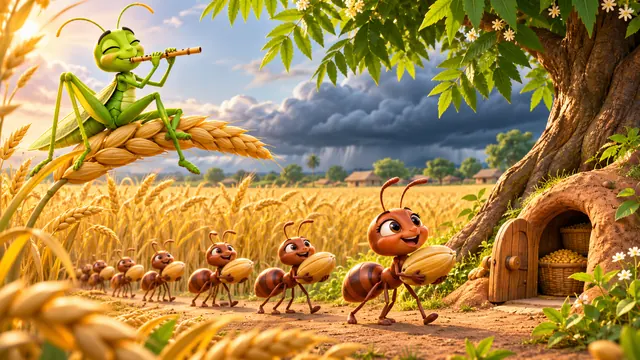
The Ant and the Grasshopper
In older versions the ants keep their grain and the grasshopper goes hungry. Here Ally's colony takes Skip in, and he promises to help next summer.
About 5 minutes to read aloud
AESOP'S FABLES FOR KIDS WITH MORALS
Read Aesop's fables for kids in English: The Thirsty Crow, The Lion and the Mouse, The Fox and the Grapes and more, each with a moral, 10 lines and Q&A.
Some of Aesop's fables end harshly in older English books. Our retellings keep each lesson but give young listeners a gentler last page.
In older versions the ants keep their grain and the grasshopper goes hungry. Here Ally's colony takes Skip in, and he promises to help next summer.
About 5 minutes to read aloud
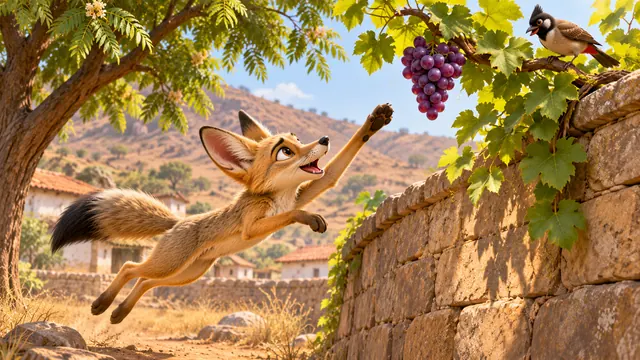
The old fable stops when the fox calls the grapes sour. Here a bulbul tastes one, Finn owns up, and the two share the grapes that fall.
About 5 minutes to read aloud
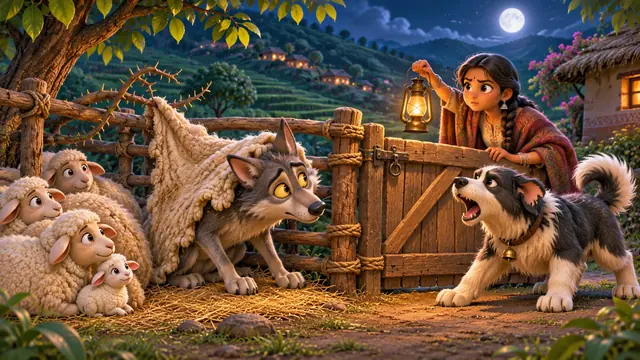
In one older translation the shepherd kills the disguised wolf by mistake. Here Scout the sheepdog chases him far into the hills instead.
About 6 minutes to read aloud

Older versions end with the tortoise's win. Here Dash wakes too late, congratulates Toby and says sorry for teasing him.
About 5 minutes to read aloud
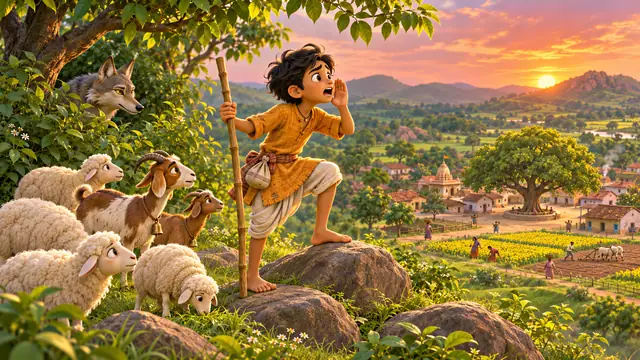
In some old versions the wolf ruins the whole flock. Here it takes two sheep, and Sam promises to tell the truth from then on.
About 6 minutes to read aloud
Aesop's fables come from ancient Greece. We moved each one somewhere an Indian child would recognize, with names that are easy to say aloud.
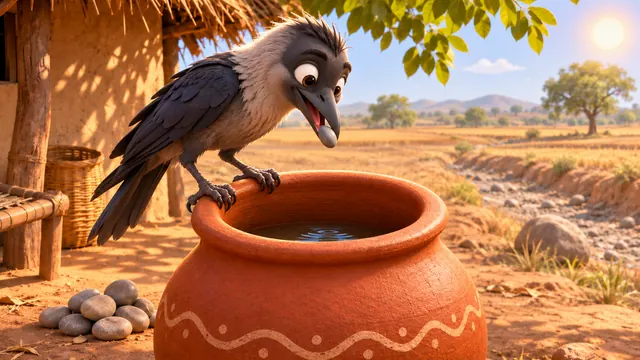
Jet's water sits at the bottom of a clay pot on a burning summer afternoon, too heavy for a small crow to tip over.
About 5 minutes to read aloud
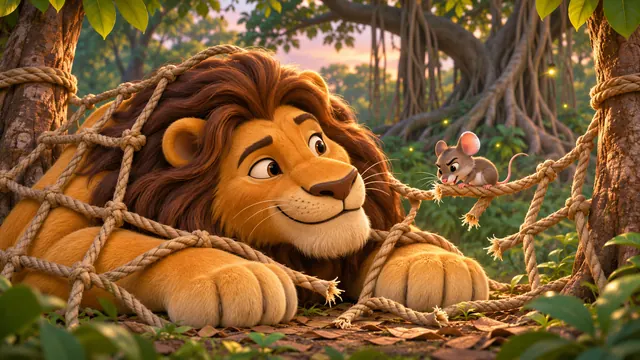
Leo naps under an old banyan tree in a forest of sal trees when Pip runs across his paw.
About 5 minutes to read aloud
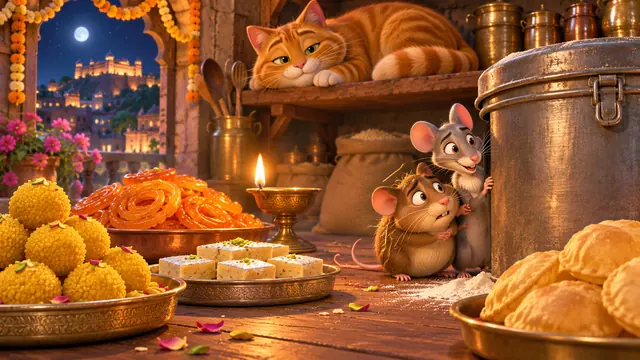
Fred eats grains and chana in his haystack; Max's city kitchen is piled with laddoos and jalebis from a wedding feast.
About 6 minutes to read aloud

The contest takes place in early winter in the hills of north India, over a traveler walking to his sister's village.
About 6 minutes to read aloud
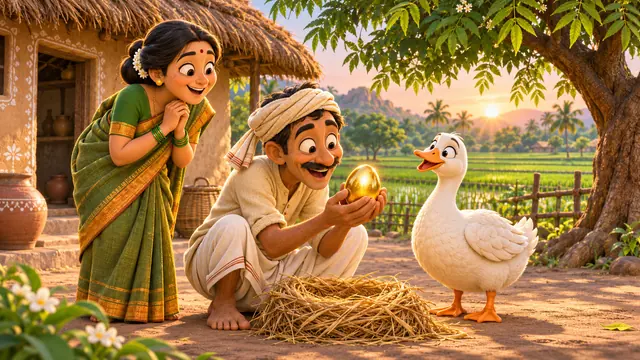
Tom and Meg live by a neem tree among green rice fields, where some nights there is one roti to share.
About 5 minutes to read aloud
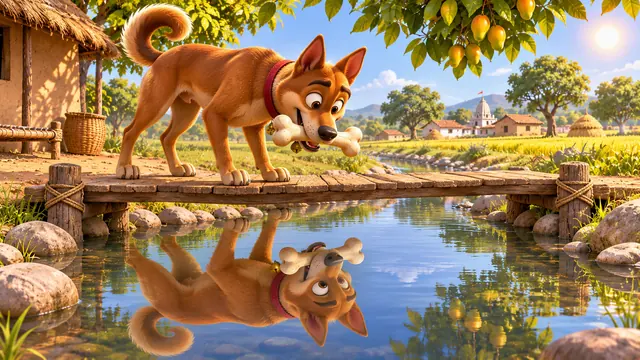
Moti is a village dog on a narrow wooden bridge, and his ending stays as sharp as Aesop's: the bone is gone.
About 5 minutes to read aloud
Aesop is remembered as a storyteller of ancient Greece who lived around 2,600 years ago. Very little is known for certain about his life. His fables were passed on by word of mouth and written down by other people many years later, so the collections we read today gathered stories from many tellers under his name.
An Aesop's fable is usually one short scene: a thirsty crow and a pot, a fox and a bunch of grapes, a tortoise and a hare at the starting line. The lesson comes quickly and is often remembered as a saying, such as "slow and steady wins the race" or "sour grapes".
The Panchatantra, from India, works differently. Its stories sit inside a larger frame story about a teacher and three princes, and characters often tell each other stories to make a point. Both traditions use animals to talk about very human choices, so families who enjoy one usually enjoy the other.
Every story here is an original Fable Stories retelling with named characters and an Indian setting, not a word-for-word translation. Each page has the full story, a short version in 10 lines and in 5 lines, the moral, and questions and answers for home or class.
In his 1894 collection, Joseph Jacobs ended each of Aesop's fables with a single short line. Here are those lines next to our retellings, whose own morals are on each story page.
FABLE STORIES ON YOUTUBE