
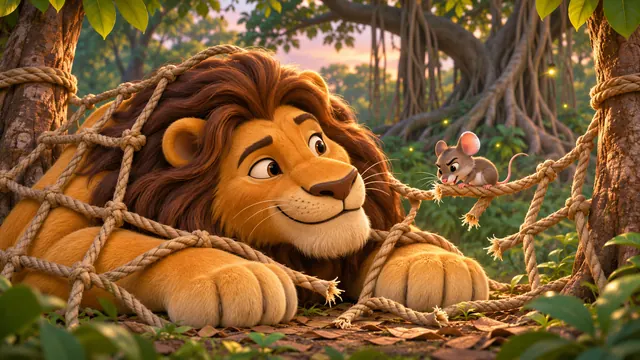
The Lion and the Mouse
Aesop's version has one mouse and one lion. Leo laughs at Pip's promise, and the tiny mouse keeps it anyway.
About 5 minutes to read aloud
SHORT ANIMAL FABLES IN ENGLISH WITH MORALS
What is a fable? Short animal fables in English with morals from the Panchatantra and Aesop, grouped so you can compare them, with tips for writing your own.
The Panchatantra comes from India and Aesop's fables from ancient Greece. Read each pair side by side: different animals and places, the same idea underneath.
Aesop's version has one mouse and one lion. Leo laughs at Pip's promise, and the tiny mouse keeps it anyway.
About 5 minutes to read aloud
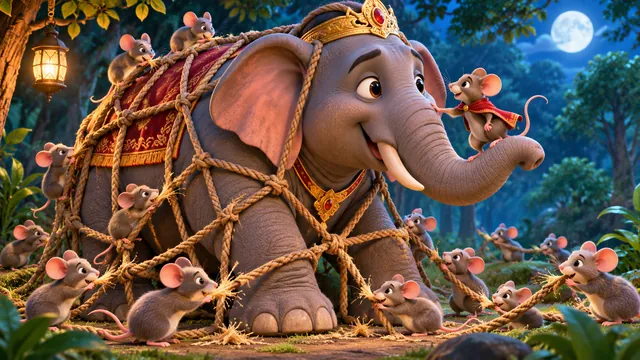
The Panchatantra version is bigger: a whole elephant herd, thousands of mice and a night of gnawing ropes.
About 4 minutes to read aloud
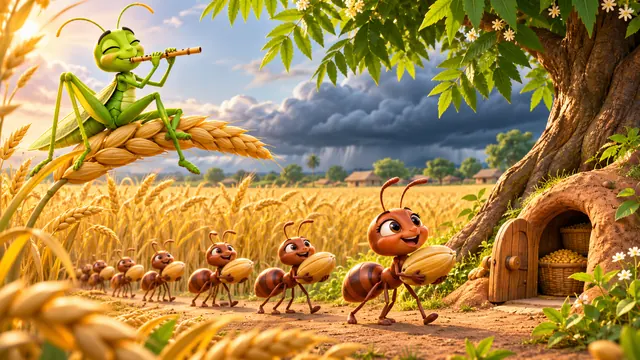
Aesop's fable about getting ready in time: Ally fills the store before the monsoon, and Skip has to be taken in.
About 5 minutes to read aloud
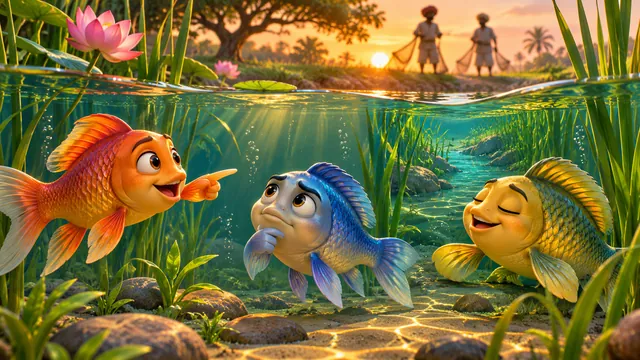
The Panchatantra asks the same question with three fish: leave early, think fast in the net, or hope for luck.
About 4 minutes to read aloud
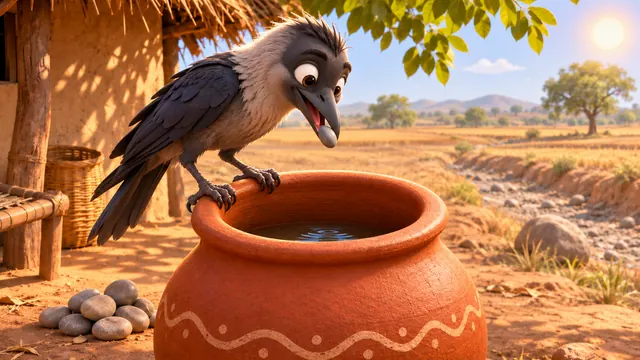
Aesop's crow is too small to tip the pot over, so he lets pebbles do the work.
About 5 minutes to read aloud
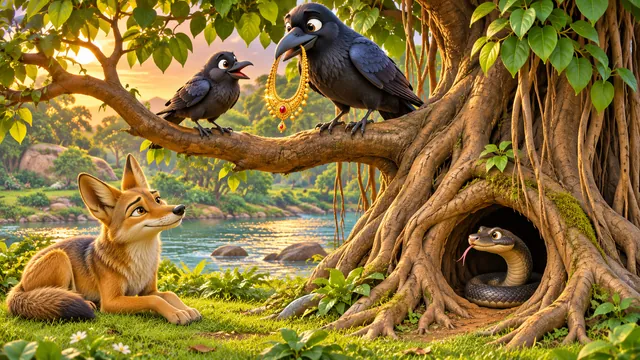
The Panchatantra crows are too small to fight a serpent, so they let a gold necklace bring the palace guards.
About 4 minutes to read aloud
Some fables are so well known that their endings became everyday English. Read the story, then ask your child when they might use the saying.
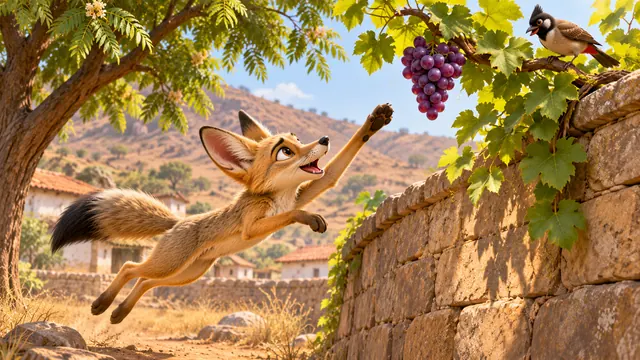
"Sour grapes" means pretending you never wanted what you could not get, as Finn does until Tilly tastes one.
About 5 minutes to read aloud
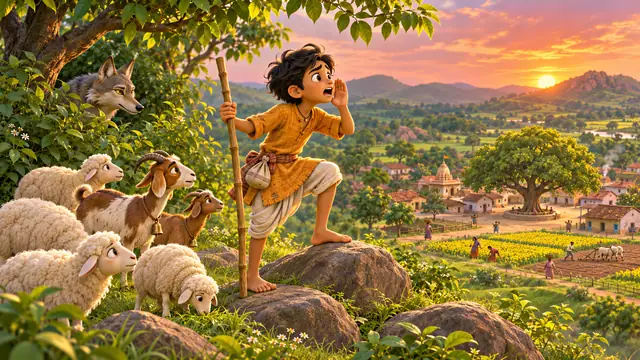
To "cry wolf" is to raise false alarms until nobody believes you, even when the danger is real.
About 6 minutes to read aloud
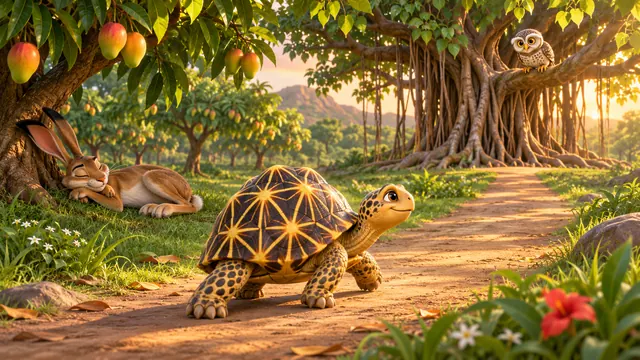
"Slow and steady wins the race" is the line people remember from Toby's walk to the banyan tree.
About 5 minutes to read aloud
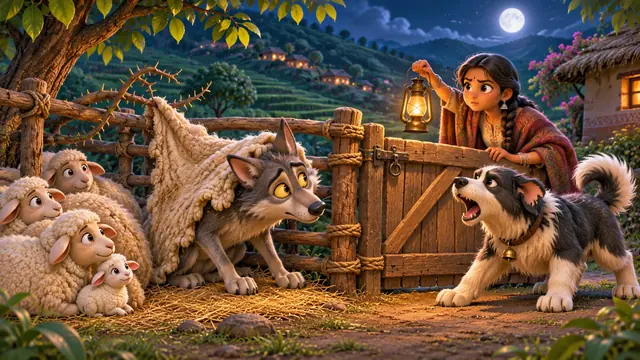
"A wolf in sheep's clothing" is someone who hides bad plans behind a gentle look, until something slips.
About 6 minutes to read aloud
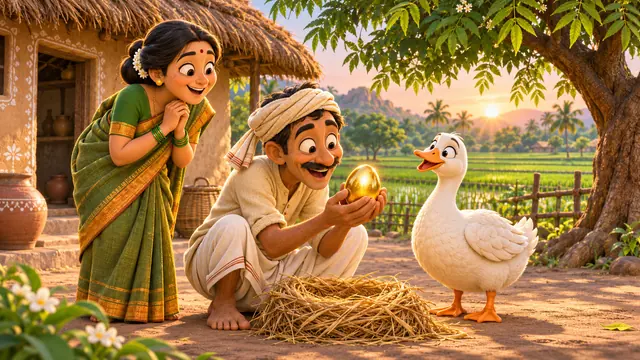
"Killing the goose that lays the golden eggs" means ruining something good because you want everything now.
About 5 minutes to read aloud
An animal mistakes something harmless for something real, and that mistake drives the whole fable.
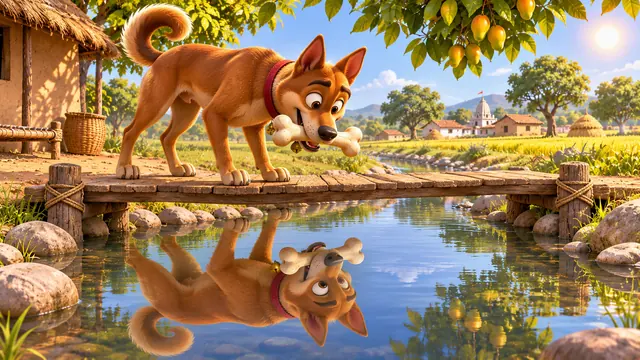
Nobody tricks Moti: he looks down from the bridge, sees a second dog with a bone and wants that one too.
About 5 minutes to read aloud
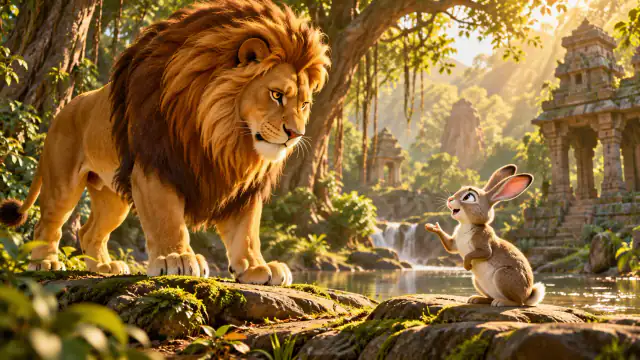
Chiku sets the trap with words. Bhairav believes another lion rules the forest, and the well does the rest.
About 4 minutes to read aloud · animation 6:30
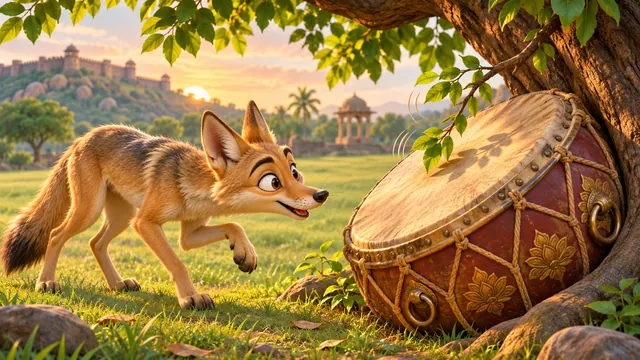
Jambu expects a monster from the boom, then a feast inside the drum, and is wrong both times.
About 4 minutes to read aloud
A cheat wins at first, then the plan turns around. Stop at the turning point and ask your child what will happen next.
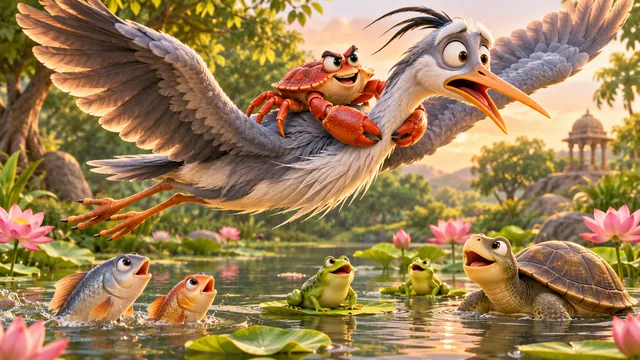
Bakul's lie works on the fish one trip at a time, until he chooses a passenger with claws.
About 5 minutes to read aloud

Kavi reveals his plan in the middle of the river, and Ranga answers it with a better story.
About 4 minutes to read aloud · animation 7:50
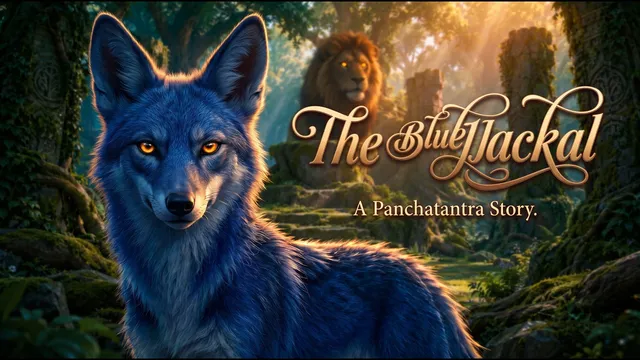
Chandra builds a kingdom on blue fur, but he cannot stop himself joining in when the jackals howl.
About 4 minutes to read aloud · animation 8:33
A friend or an elder gives good advice, and the main character does the opposite. Pause after the warning and ask what your child would do.
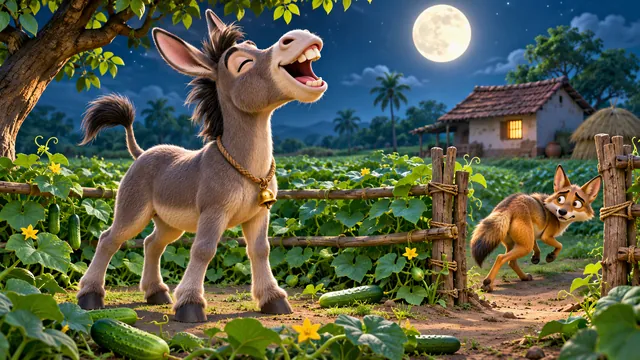
Phurti tells Bholu that singing in the cucumber field will wake the farmer. Bholu sings anyway.
About 4 minutes to read aloud
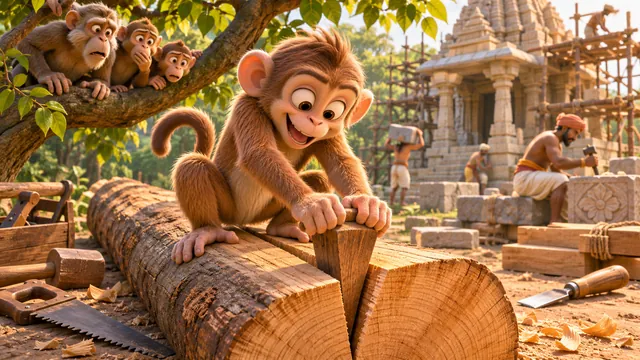
The old monkey says to leave the carpenters' tools alone, and Chapal's tail finds out why.
About 4 minutes to read aloud
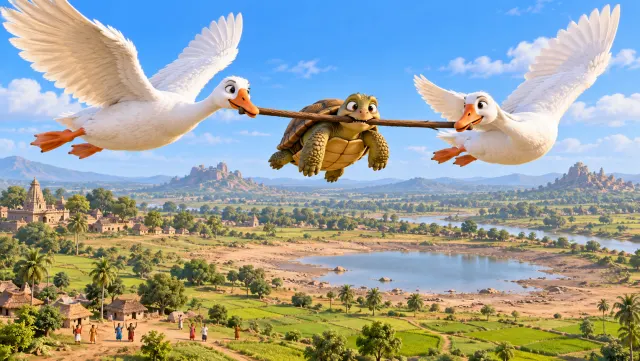
The geese have one rule for the flight, keep your mouth closed, and Kambu breaks it the first time someone laughs.
About 3 minutes to read aloud
A fable is a short story, often with animal characters, that teaches a moral lesson. The animals speak and act like people, which makes ideas such as pride, trust, and generosity easier to picture. The moral is the lesson a reader takes away from what the characters choose and what happens next.
Most fables are built from the same few parts. Each animal has one strong trait: a proud lion, a patient tortoise, a greedy dog. There is one problem, one choice and one result, and the story ends soon after the result. The moral is often said in a single line at the end, but a good fable makes the lesson clear before anyone says it.
A moral story is a broader category: it can use human characters, animals, or an everyday situation. A fable usually condenses its lesson into a short, memorable adventure, which is why the same fable can be retold in a minute or over a whole bedtime.
To write your own fable, pick an animal and give it one trait. Give it a problem that the trait makes better or worse, let it make a choice, and show what happens because of that choice. End with the moral in one short sentence. Five or six lines are enough, and the short version at the top of each story page shows the shape.
These pages are original Fable Stories adaptations rather than word-for-word translations of ancient texts. Read the full retelling on each story page, watch the animation where there is one, then ask what the main character could have done differently.
Panchatantra: The Monkey and the Crocodile, The Four Friends and the Hunter, The Blue Jackal, The Bird with Golden Feathers, The Lion and the Clever Rabbit, The Crows and the Serpent, The Doves and the Hunter, The Heron and the Crab, The Jackal and the Drum, The Mice and the Elephants, The Monkey and the Wedge, The Musical Donkey, The Three Fish, The Talkative Tortoise (The Tortoise and the Geese), The Brahmin and the Mongoose
Aesop's Fables: The Greedy Dog, The Town Mouse and the Country Mouse, The Wolf in Sheep's Clothing, The Ant and the Grasshopper, The Fox and the Grapes, The Lion and the Mouse, The Thirsty Crow, The Tortoise and the Hare
FABLE STORIES ON YOUTUBE