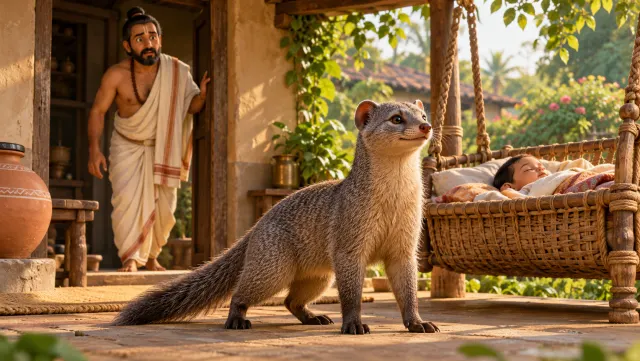
The short answer
According to tradition, the Panchatantra was written by Vishnu Sharma, a learned teacher. His name comes from the opening of the book, where he appears as the storyteller.
Outside the book, nothing about him can be confirmed. No record tells us when he was born, where he lived or whether he was one real person. Scholars usually describe the Panchatantra as the work of an author or authors whose names and dates are not known for certain, and they treat Vishnu Sharma as the name the tradition has handed down.
The king, the three princes and the teacher
The Panchatantra begins with a problem. In a city the book calls Mahilaropya there lived a king named Amarashakti. He was wise and generous, but his three sons had no interest in learning. The king worried about what would happen to his kingdom when princes who would not study had to rule it.
He asked his ministers for advice. One of them said that learning the usual way would take many years, and suggested a teacher who was known for his wisdom: Vishnu Sharma.
The king offered the teacher great wealth if he could educate the princes. In the tale, Vishnu Sharma is an old man who refuses the reward. He says he does not sell learning, and he makes a bold promise instead: within six months the princes will understand how to think and act wisely.
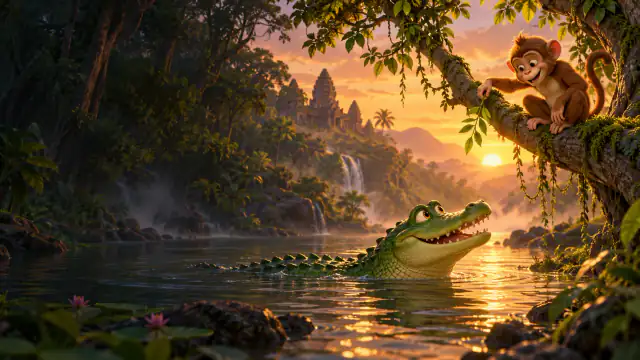
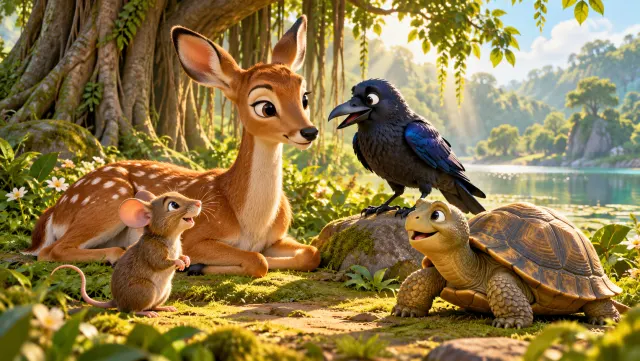
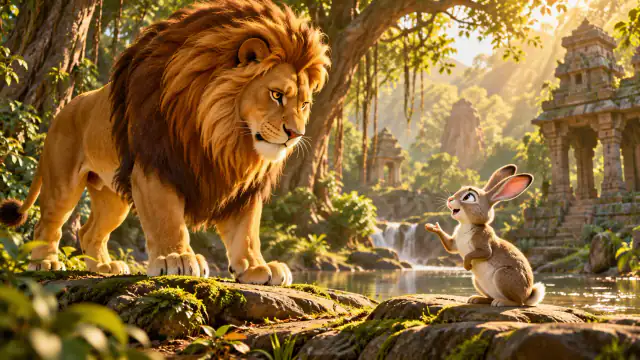
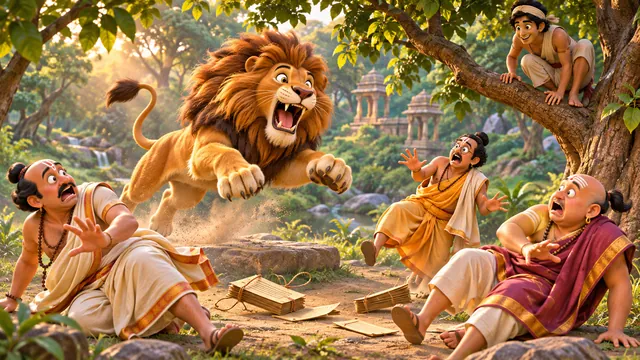
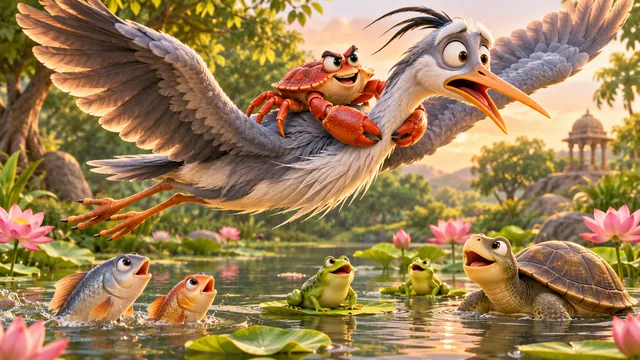
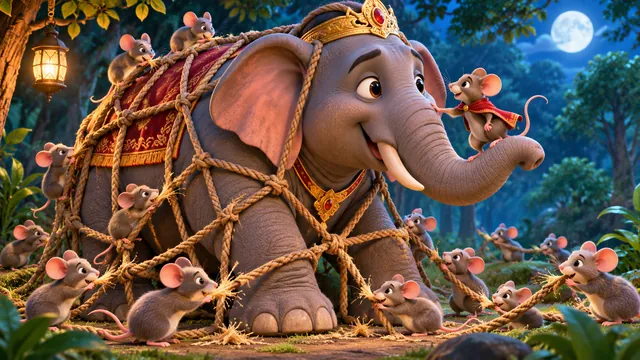
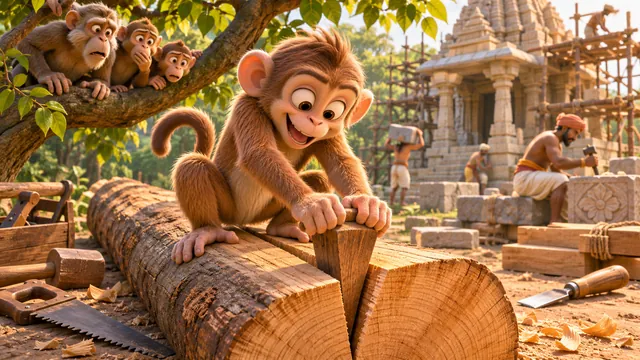
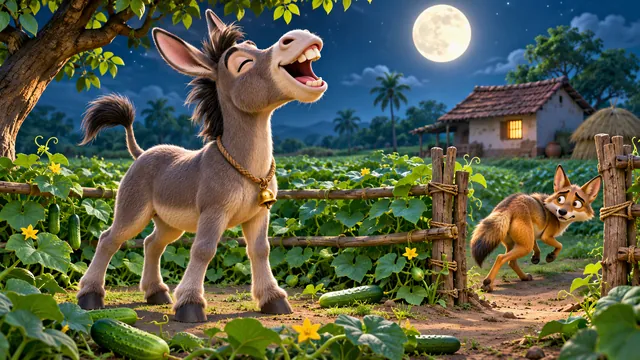
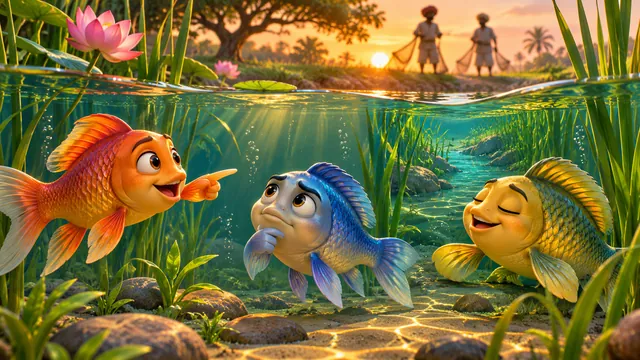
He kept the promise in an unusual way. He did not lecture. He told the princes stories about lions, jackals, crows, mice, monkeys and crocodiles, and each story carried a lesson about friendship, trust, judgment or courage. One tale led into the next, so the princes kept listening. By the end, the book says, they had learned what years of ordinary lessons had failed to teach them.
Why he taught with stories
The opening tale explains how the whole Panchatantra is built. The name means "five treatises", and the five books are the five sets of lessons the teacher gave. Stories sit inside other stories because that is how he held the princes' attention.
It also explains why the fables feel so practical. They were meant to prepare young rulers for real decisions: whom to trust, when to act, how to answer a stronger opponent and why a hasty choice can be dangerous. Children enjoy the animals, and the advice underneath still makes sense to adults.
What is really known
The Panchatantra was composed in Sanskrit in ancient India. Its exact age is not known. Scholars' estimates are spread across several centuries, so this page does not give a single date.
Whether Vishnu Sharma was a historical teacher, a pen name or a character invented for the opening tale cannot be proved either way. Some scholars think the frame story is simply part of the fiction. What is certain is that the book presents him as its storyteller, and that readers have known him by that name for a very long time.
The collection also changed as it was copied and retold. Different versions contain different numbers of stories, which is why there is no single fixed count.
How the stories traveled the world
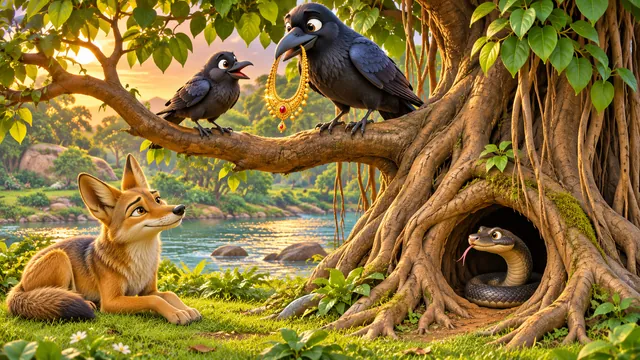
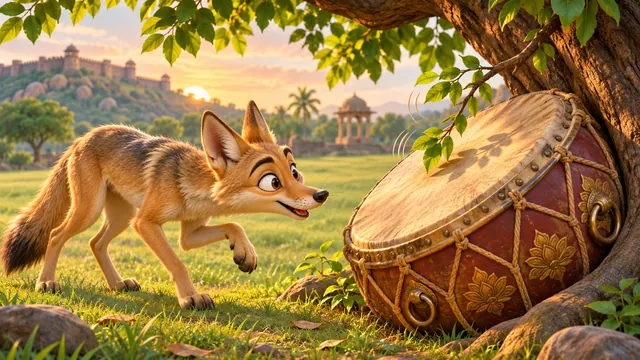
The Panchatantra did not stay in one language. In the sixth century it was translated into Middle Persian, and in the eighth century into Arabic under the title Kalila wa Dimna, named after two jackals from the first book. From there the stories passed into many other languages across Asia and Europe.
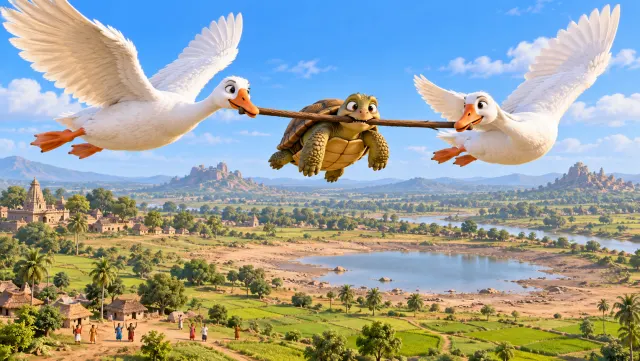
Along the way, storytellers changed names, added tales and left others out. That is one reason the same fable can be found today in slightly different forms, such as The Tortoise and the Geese, which we retell as The Talkative Tortoise.
To see how the five books are organized and to read the stories, go to our guide to Panchatantra stories.
Questions and answers about the author
Who is the author of the Panchatantra?
Tradition names Vishnu Sharma, a learned teacher, as the author of the Panchatantra. His name comes from the opening of the book itself. Nothing about his life can be confirmed from other sources, so scholars treat the authorship as traditional.
Was Vishnu Sharma a real person?
Nobody knows for certain. He may have been a real teacher, a pen name, or a character created for the opening story. The book presents him as its storyteller, and no other record of his life has been found.
Why did Vishnu Sharma write the Panchatantra?
According to the book's opening tale, a king asked him to educate three princes who would not study. Vishnu Sharma promised to make them wise in six months and taught them through animal stories, each with a lesson about how to think and act.
When was the Panchatantra written?
The exact date is not known. The Panchatantra was composed in Sanskrit in ancient India, and scholars' estimates are spread across several centuries.
In which language was the Panchatantra originally written?
The Panchatantra was originally composed in Sanskrit. It was later translated into Middle Persian, Arabic and many other languages, which is how its stories spread around the world.