What is Children's Day in India?
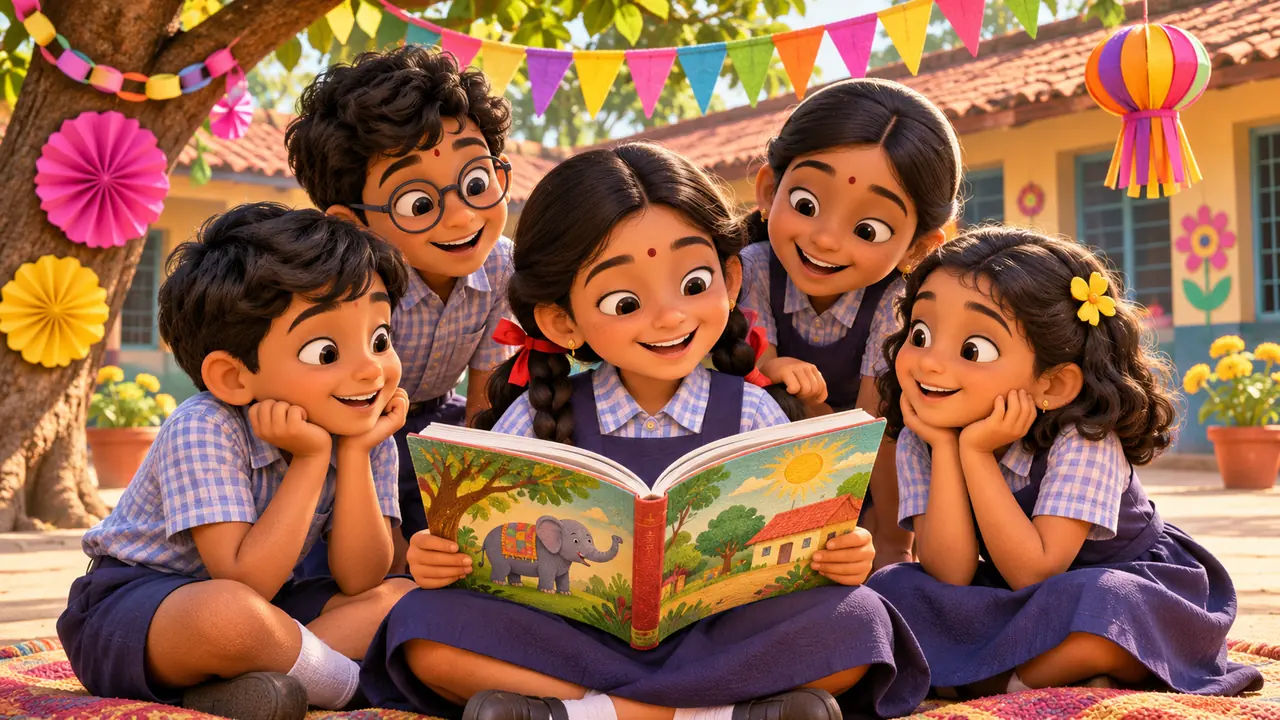
Children's Day, called Bal Diwas in Hindi, is celebrated across India on 14 November. Schools hold special programs with songs, dances, plays, games and competitions, and many teachers organize treats or perform for their students. It is generally a day of celebration in schools rather than a national holiday, so what happens depends on your school and your state.
The date is fixed and does not move with the lunar calendar. In 2026, 14 November falls on a Saturday, so some schools hold their celebrations on Friday 13 November. In 2027 it falls on a Sunday.
Children's Day in 10 lines
- In India, Children's Day falls on 14 November every year.
- In Hindi it is called Bal Diwas.
- The day honors Jawaharlal Nehru, India's first Prime Minister, who was born on 14 November.
- Nehru loved children, and they called him Chacha Nehru.
- He believed every child should get the chance to learn and grow.
- On this day, schools hold programs with songs, dances and plays.
- Teachers often perform for their students or give them treats.
- Children play games and take part in fun competitions.
- Many other countries celebrate their own Children's Day on different dates.
- The day reminds us that every child deserves care, safety and joy.
Why 14 November?
14 November is the birthday of Jawaharlal Nehru, who was born in 1889 and became the first Prime Minister of independent India. He was known for his affection for children, who called him Chacha Nehru, which means Uncle Nehru. He often spoke of children as the future of the country and of the need to give every child a chance to learn and grow.
India did not always celebrate on this date. Until 1964, the country marked Children's Day on 20 November, the date linked with Universal Children's Day. After Nehru died in 1964, it was decided to honor his love for children by moving the day to his birthday, and 14 November has been Children's Day ever since.
Universal Children's Day and the world
The United Nations recommended in 1954 that every country set aside a day to promote the welfare of children. Universal Children's Day is on 20 November, the date on which the UN General Assembly adopted the Declaration of the Rights of the Child in 1959 and the Convention on the Rights of the Child in 1989. The Convention is a promise that children everywhere have rights, including to learn, to be safe, to play and to be heard.
Many countries choose a date of their own, so the world has several Children's Days.
- India. 14 November, Nehru's birthday.
- Japan. Kodomo no Hi, on 5 May, when families fly carp-shaped streamers called koinobori to wish children health and strength.
- Turkey. National Sovereignty and Children's Day, on 23 April, when children take part in ceremonies and some even take symbolic roles in government for a day.
- Mexico. Día del Niño, on 30 April, with parties, games and gifts.
- China and many other countries. International Children's Day, on 1 June, with school shows and outings.
How to celebrate Children's Day at home or in class
The best celebrations are simple and let children take the lead. Here are some ideas that need little preparation.
- Read one story together. Choose a short fable and let the children pick a favorite character. Then try two of the discussion questions below.
- Let children choose. Let them pick the game, the snack or the song for a day, and ask what they would change if they were in charge for an hour.
- Color and display. Print a free coloring page and hang the finished pictures on the wall or the classroom door.
- Say thank you. Ask each child to write or draw a thank-you note to a person who helps them, such as a teacher, a grandparent or a bus driver.
- Do one kind thing. Plan a small act of kindness together, such as sharing books or toys, or helping a younger child.
- Talk about rights. Ask older children what every child needs to be safe and happy, such as food, a home, school, play and a chance to be heard.
Children's Day wishes from our characters
Feel free to share these short wishes in cards, class assemblies or messages. Each one comes from a character in our stories and a lesson that child readers can use.
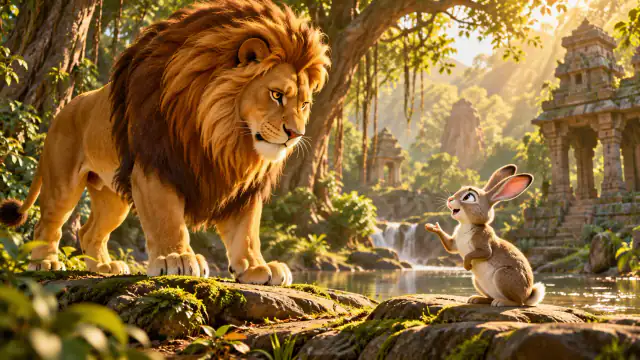
- From Chiku the rabbit. A small child can have a big idea. Think carefully, be brave and you can solve problems that look too big. Happy Children's Day!
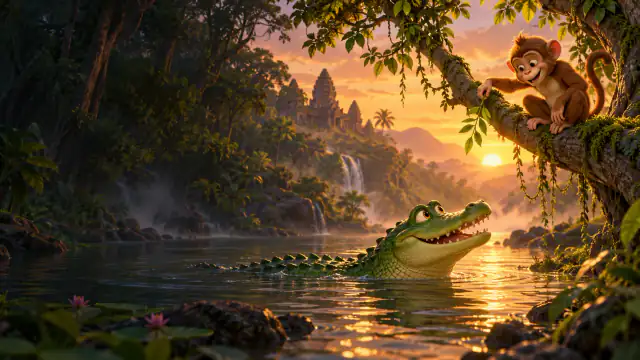
- From Ranga the monkey. When you feel scared, take a deep breath. A calm mind can find a way. Happy Children's Day!
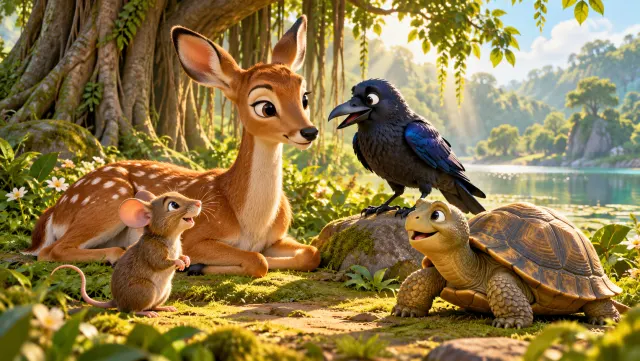
- From Chitra, Kaku, Hira and Dhruv. Everyone is good at something different, and friends are strongest when they help each other. Happy Children's Day!
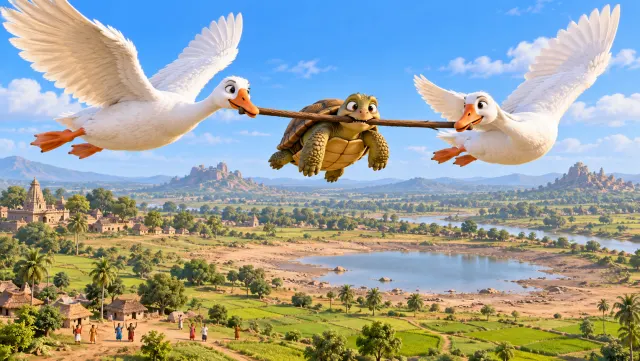
- From Kambu the tortoise. Listen first, speak second, and remember that everyone gets a second chance to try again. Happy Children's Day!
- From Veer the mongoose. Be kind and loyal, and always check the facts before you decide. Happy Children's Day!