What is Eid al-Fitr?
Eid al-Fitr is one of the two main festivals in Islam. The Arabic name means "the festival of breaking the fast". It is celebrated on the first day of Shawwal, the month that follows Ramadan. Eid is also a time to say "Eid Mubarak", which means "blessed Eid".
During Ramadan, Muslims who are able fast from dawn to sunset, and they spend more time in prayer, reading the Quran and helping others. Muslims believe the Quran began to be revealed during this month. Eid is the happy day when the fast ends.
Eid al-Fitr in 10 lines
- Eid al-Fitr is a major festival for Muslims all over the world.
- It comes when Ramadan, the month of fasting, is over.
- In Ramadan, many Muslims eat and drink nothing between dawn and sunset.
- Eid begins when the new crescent moon is seen in the sky.
- Before the Eid prayer, families give food or money to people in need.
- In the morning, people wear new clothes and go to the mosque to pray.
- Everyone hugs and says "Eid Mubarak", which means blessed Eid.
- In India, many families make a sweet dish called sheer khurma.
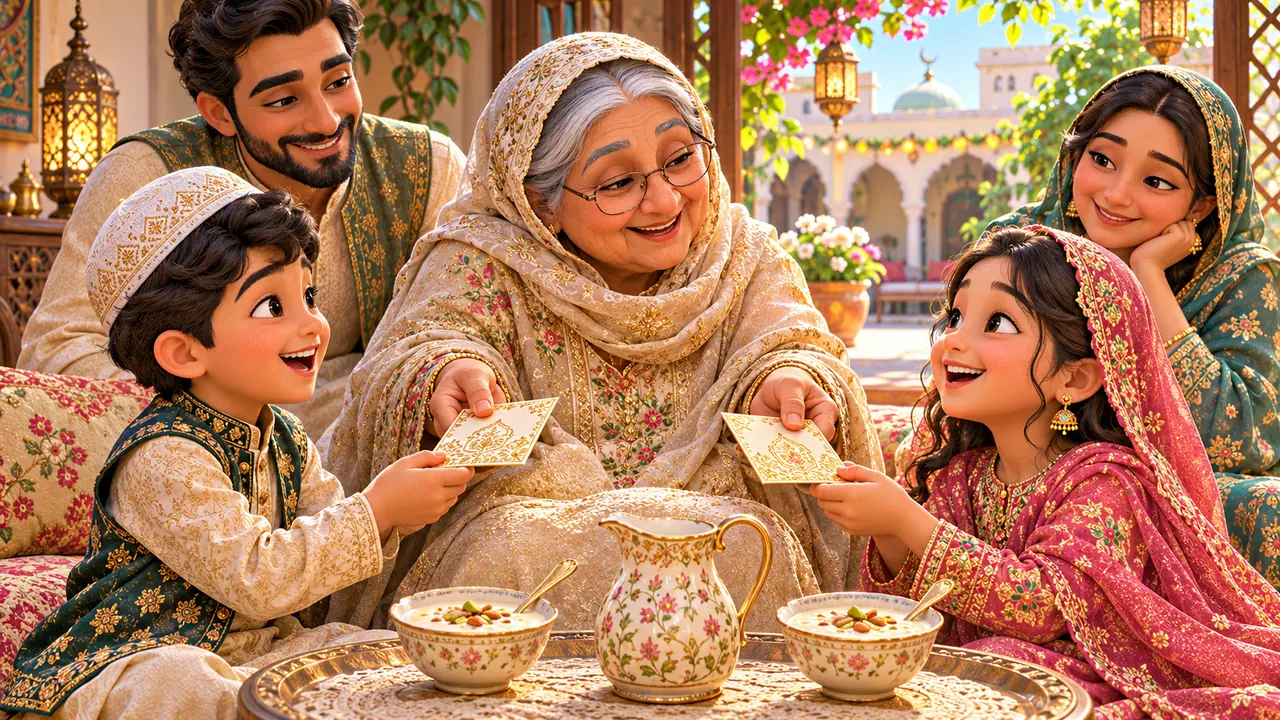
- Children receive a gift of money from their elders, called Eidi.
- Eid teaches us to be thankful, generous and kind.
How the date is decided
The Islamic calendar follows the moon. Each month begins with the sighting of the new crescent, and a lunar year is about eleven days shorter than the year most of us use, so Ramadan and Eid move earlier each year.
Eid al-Fitr begins when the new moon of Shawwal is seen, so the day can differ by one day from country to country. In 2027 Ramadan is expected to begin around 8 February, and Eid al-Fitr is expected on 9 or 10 March, depending on the moon.
How families celebrate Eid
Eid is a day for prayer, family and generosity. Customs vary from place to place, but many families share these traditions.
- Charity before prayer. Before the Eid prayer, Muslims give a special gift of food or money to people in need, called Zakat al-Fitr, so that everyone can enjoy the festival.
- The Eid prayer. In the morning, people dress in their best or in new clothes and gather in a mosque or in a large open space for a special congregational prayer. Many exchange greetings and hugs afterward.
- Food. Families share a festive meal. In India and Pakistan, a sweet dish of vermicelli cooked in milk, called sheer khurma, is a favorite, and many families begin the day with dates or a sweet.
- Eidi. Children often receive small gifts of money or presents, called eidi, from parents, grandparents and relatives.
- Visiting. Families visit relatives, friends and neighbors, exchange sweets and often invite people of other faiths to share the meal.
- Henna and new clothes. In many places, girls and women decorate their hands with henna, called mehndi, on the evening before Eid.
Eid around the world
Muslims live in every part of the world, so Eid looks a little different everywhere. In India, the night before Eid, called Chand Raat, is a busy evening of markets and henna. In Turkey the festival is known as Ramazan Bayramı, and in Indonesia and Malaysia people return to their home villages in a custom called mudik or balik kampung. In Egypt and many Arab countries families enjoy special biscuits. Many countries make Eid a public holiday that lasts several days.
There is a second major festival, Eid al-Adha, which comes about two months later and is a different celebration.
What Eid teaches
Eid is about gratitude, generosity and forgiveness. Ramadan teaches patience and kindness toward people who have less, and Eid is a time to share what we have and to be with the people we love.